

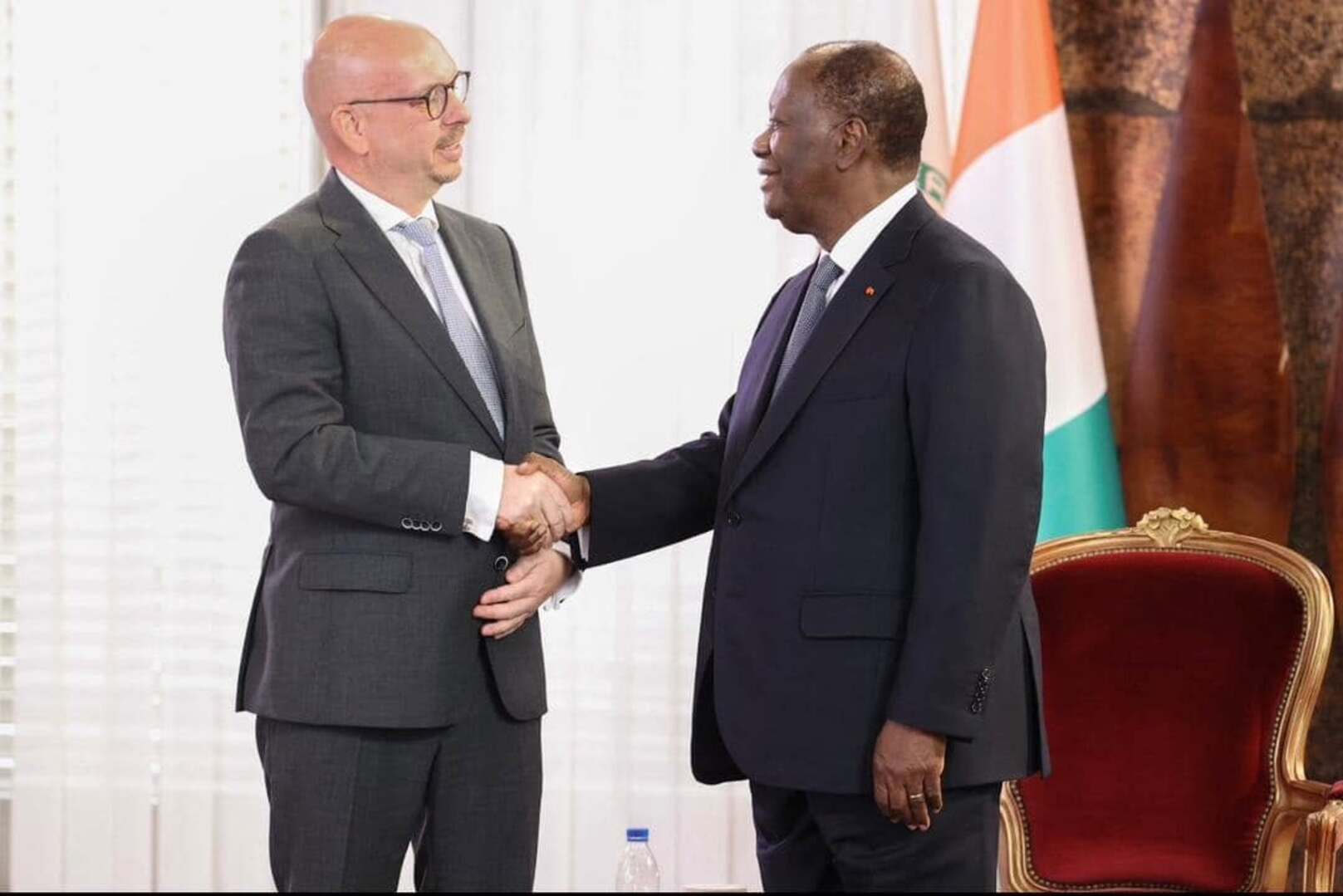
“Our ambition is to support Côte d’Ivoire in building a more productive agricultural sector,” said H.E. Jeroen Kelderhuis, Ambassador of the Kingdom of the Netherlands to Côte d’Ivoire, during an interview.
During the discussion, the Ambassador highlighted the priorities of Dutch cooperation with Côte d’Ivoire, including technological innovation, strengthening farmers’ capacities, and supporting value chains to improve productivity and resilience in the face of climate and economic challenges.
He also highlighted Curaçao, a constituent country of the Kingdom of the Netherlands, and discussed how the 2026 FIFA World Cup could provide an opportunity to further strengthen economic and cultural ties between Côte d’Ivoire and the Kingdom of the Netherlands.
History
How would you describe the evolution of diplomatic relations between the Kingdom of the Netherlands and Côte d’Ivoire over the past 10 years?
Over the past decade, relations between the Kingdom of the Netherlands and Côte d’Ivoire have significantly deepened and diversified.
We have moved from a relationship primarily focused on trade to a strategic partnership covering agriculture, infrastructure, economic development, climate resilience, security, and stability. We are also a major contributor within multilateral cooperation frameworks, both as a member state of the European Union and through multilateral development institutions such as the World Bank, the European Bank for Reconstruction and Development (EBRD), and the African Development Bank (AfDB).
The presence of Dutch companies has grown, as has the involvement of financial institutions such as the Dutch public investment bank Invest International, and soon the Dutch entrepreneurial development bank FMO, which will open its Francophone Africa office in Abidjan by the end of 2026.
The Kingdom of the Netherlands had the honour of being the guest country at the sixth edition of the International Exhibition of Agriculture and Animal Resources (SARA) in 2023. Last year, a large delegation of Dutch companies and organisations once again participated in SARA 2025.
Exchange missions between our two countries have also increased. One example is the joint mission of the Ministry of Animal Resources and Fisheries and the Ministry of State, Ministry of Agriculture, Rural Development and Food Production of Côte d’Ivoire to the Netherlands in April 2025.
Since the beginning of 2026, we have welcomed around eight high-level delegations from various Dutch institutions and private-sector organisations interested in investing in Côte d’Ivoire. In February 2026, the CEO of Invest International visited Côte d’Ivoire and was received by the Prime Minister of the Republic of Côte d’Ivoire.
In April 2026, we welcomed a major delegation of 19 Dutch organisations and companies from the seed, horticulture, and potato sectors. Shortly afterwards, a delegation from the Port of Amsterdam visited Côte d’Ivoire to strengthen cooperation with the ports of Abidjan and San Pedro.
In June 2026, we welcomed a delegation from the Dutch development finance institution FMO, led by its CEO and Africa regional directors. FMO has already invested more than €200 million in infrastructure projects in Côte d’Ivoire. These investments are expected to increase significantly with the opening of its Francophone Africa office in Abidjan.
These examples demonstrate the dynamism of cooperation between the Kingdom of the Netherlands and the Republic of Côte d’Ivoire. We intend to go even further through the launch of our multi-year cooperation strategy for 2026–2029, aligned with Côte d’Ivoire’s National Development Plan