

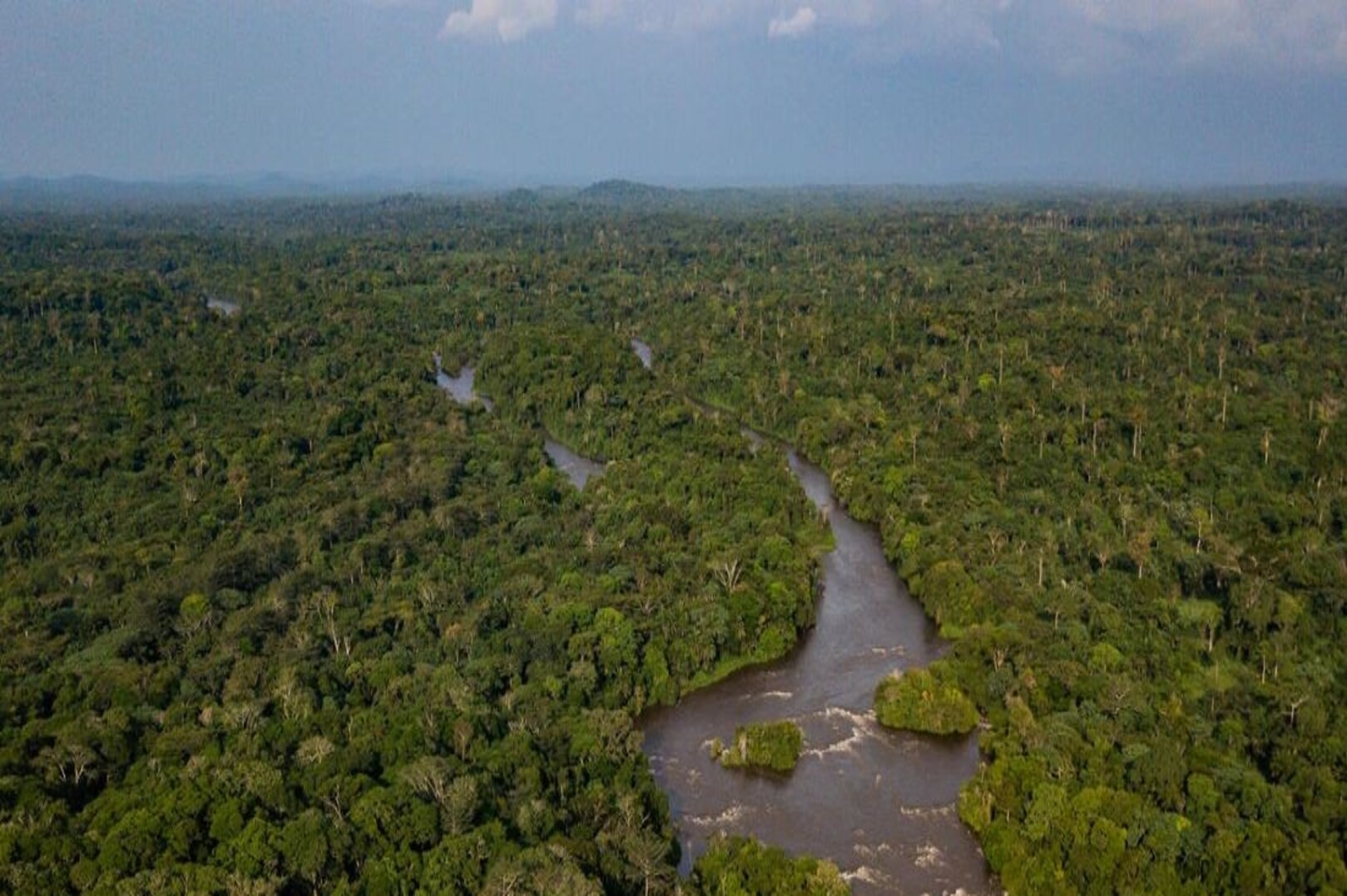
Africa is home to some of the world’s most important forest ecosystems, from the Congo Basin to the forests of West and East Africa. Yet the continent continues to capture only a limited share of the economic value generated by the global forest-products industry.
According to the Food and Agriculture Organization of the United Nations (FAO), Africa accounts for about 16% of the world’s forest area. The continent’s forests are a critical resource for biodiversity, climate regulation, energy, livelihoods and economic activity.
But the continent’s position in international trade in forest products has historically been far smaller than its share of global forest resources.
The gap highlights a central challenge for Africa: how to transform its abundant natural resources into greater local value without accelerating deforestation or degrading ecosystems.
Africa’s forests cover hundreds of millions of hectares and support millions of people directly and indirectly.
The Congo Basin alone contains one of the world’s largest tropical forest ecosystems and plays a major role in global climate regulation.
Yet the continent has historically struggled to develop large-scale industries capable of processing forest resources into higher-value products.
Much of Africa’s forest economy remains focused on primary products, including logs and basic wood products, rather than more sophisticated products such as furniture, engineered wood, paper, packaging and other processed materials.
FAO has previously highlighted this structural weakness, noting that Africa’s forest-product exports have historically been dominated by relatively low levels of processing.
The result is a familiar pattern across many African commodity sectors: the continent possesses the raw material, but much of the transformation and higher-value economic activity takes place elsewhere.
FAO estimates that global exports of wood and paper products reached $486 billion in 2024, up 1.4% from the previous year. International trade in non-wood forest products added another $25 billion.
The global market includes everything from roundwood and sawn timber to panels, pulp, paper, packaging and wooden furniture.
Africa remains a relatively small player in many of these higher-value segments.
That creates both an economic opportunity and a policy challenge.
Instead of exporting primarily raw or minimally processed materials, African countries could capture more value by developing domestic processing industries, improving logistics and investing in technology, skills and sustainable forest management.
The economic consequences extend beyond export revenues.
When timber is processed locally, the value chain can generate additional employment, tax revenues, industrial capacity and business opportunities for local companies.
Sawmills, furniture manufacturers, paper producers, packaging companies and engineered-wood industries can create economic activity far beyond the forest itself.
But building those industries requires reliable electricity, transport infrastructure, access to finance, technical skills and predictable regulations.
These remain significant challenges in many African markets.
The FAO has also identified institutional, financial and technical constraints as obstacles to the development of sustainable forest industries in parts of Africa.
Africa’s forest opportunity comes with another major challenge: protecting the forests themselves.
The continent has experienced significant forest loss over recent decades, driven by agriculture, energy needs, infrastructure development and other pressures.
This creates a difficult policy balance.
Governments need to generate jobs and export revenues from natural resources while preventing uncontrolled exploitation.
The solution is therefore not simply to increase timber production.
It is to develop a forest economy based on sustainable management, traceability, efficient processing and greater value addition.
The global demand for wood products is evolving.
Engineered wood, sustainable construction materials, packaging, biomass and other forest-based products are creating new markets. FAO data show continued growth in several wood-product categories, including panels, pulp, paper and paperboard.
For Africa, this could create an opportunity to move beyond traditional timber exports.
Countries with significant forest resources could seek to attract investment in processing plants, develop local manufacturing and integrate their forest industries into regional and global value chains.
The objective would be straightforward: export more finished products and fewer raw materials.
Africa’s 16% share of global forest area should therefore not be viewed simply as a measure of natural wealth.
It is also a measure of potential.
The continent has the resources to develop much larger forest-based industries, but doing so sustainably will require major investment in infrastructure, technology, skills and governance.
The question is no longer simply how much forest Africa possesses.
It is how much economic value the continent can generate from those forests while ensuring that they remain standing for future generations.
With the global forest-products market now worth hundreds of billions of dollars, the opportunity is substantial.
The challenge for Africa is to ensure that more of that value is created, processed and retained on the continent.