

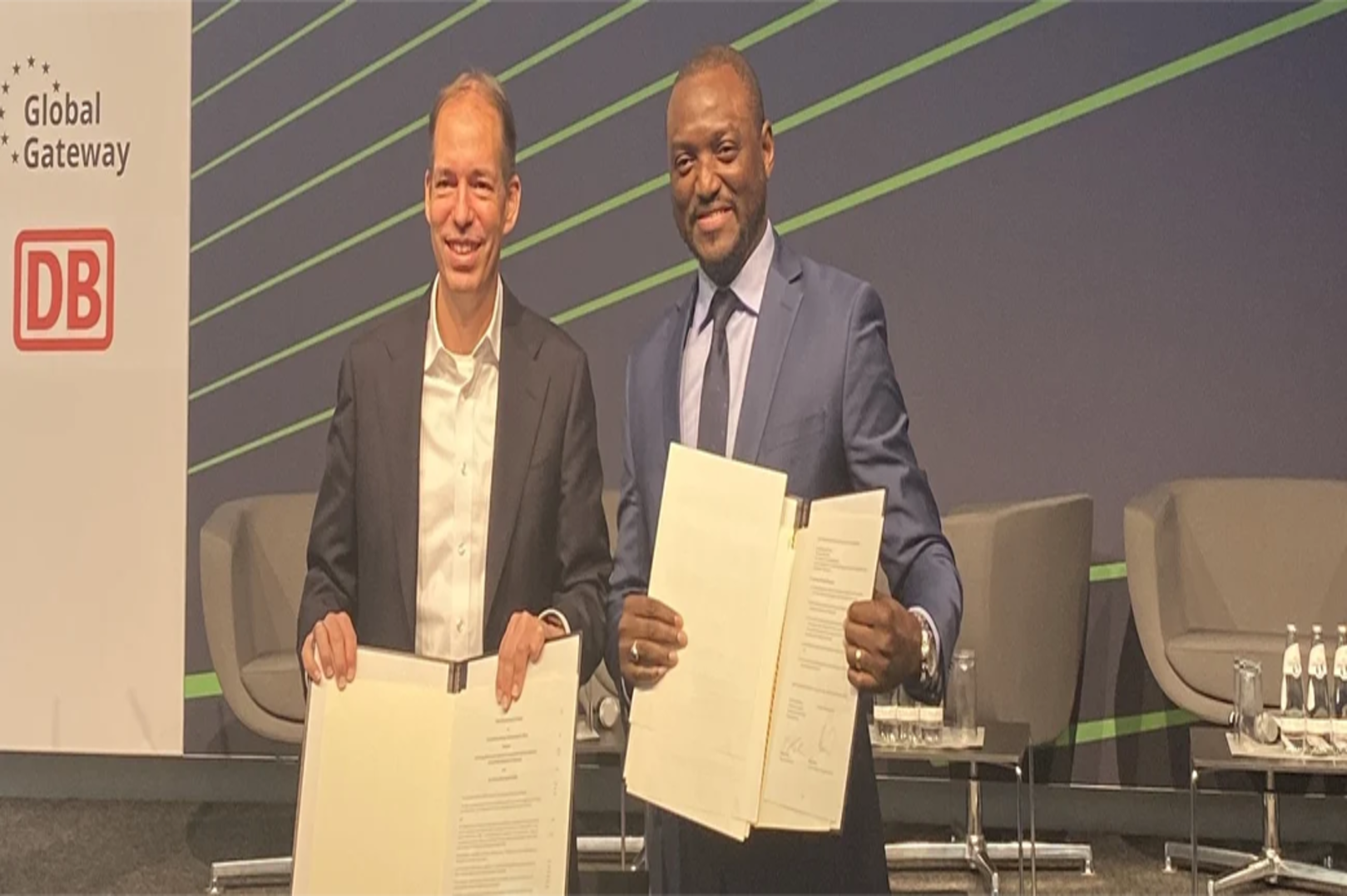
The African Development Bank (AfDB) and Germany’s Federal Ministry for Economic Cooperation and Development (BMZ) have signed a letter of intent to cooperate on developing Africa’s railway networks and strengthening regional economic integration.
The agreement was signed on Sept. 30 during the inaugural African European Industry Dialogue on Railways, held as part of InnoTrans, an international transport technology trade fair in Berlin. Mike Salawou, the AfDB’s director for infrastructure and urban development, signed on behalf of the bank, while BMZ Deputy Director General Michael Krake represented Germany.
The partnership will focus on reducing transport costs, improving the interoperability of cross-border railway networks and promoting low-carbon transport solutions. It will also support sustainable transport policies and the development of local skills through vocational training, technology transfer and job creation.
The first step will be a joint feasibility study for an African Rail Competence Centre, to be implemented by Germany’s development agency GIZ. The study is expected to begin in October 2026 and will examine how innovation and training can contribute to modernising and expanding Africa’s railway sector.
The AfDB estimates that Africa’s railway network represents only about 8% to 10% of the global rail network. At the same time, the African Continental Free Trade Area, or AfCFTA, is increasing demand for cross-border movement of goods and passengers across a market of more than 1.4 billion people.
The bank said better rail connectivity could help lower transport costs and facilitate trade between African countries, while reducing reliance on more carbon-intensive forms of transport.
The AfDB highlighted several railway and transport projects it already supports, including the Lobito Corridor, the Standard Gauge Railway programme in East Africa, the Nacala Corridor, Algeria’s North-South Railway Corridor, Morocco’s high-speed rail network and urban rail projects in Senegal and Nigeria.
The partnership goes beyond railway construction, with both sides placing emphasis on the ability to operate and maintain networks once they are built.
AfDB infrastructure chief Mike Salawou identified five priorities for the sector: creating a continental rail market supported by AfCFTA, encouraging a shift toward rail transport, establishing interoperable standards, mobilising financing capable of attracting private investment, and developing the workforce needed to operate railway systems.
The agreement does not itself announce a specific package of financing for railway construction. Instead, it establishes a framework for cooperation, with feasibility work, technical expertise, skills development and project preparation forming part of the initial approach.
For Germany, the partnership adds to its broader cooperation with African countries on infrastructure, economic development and skills. The BMZ said the cooperation with the AfDB would support regional connectivity and sustainable economic development through practical work on interoperability and skills development.
The initiative comes as African governments seek to improve transport links between countries and make railways more capable of supporting regional trade and economic integration.