

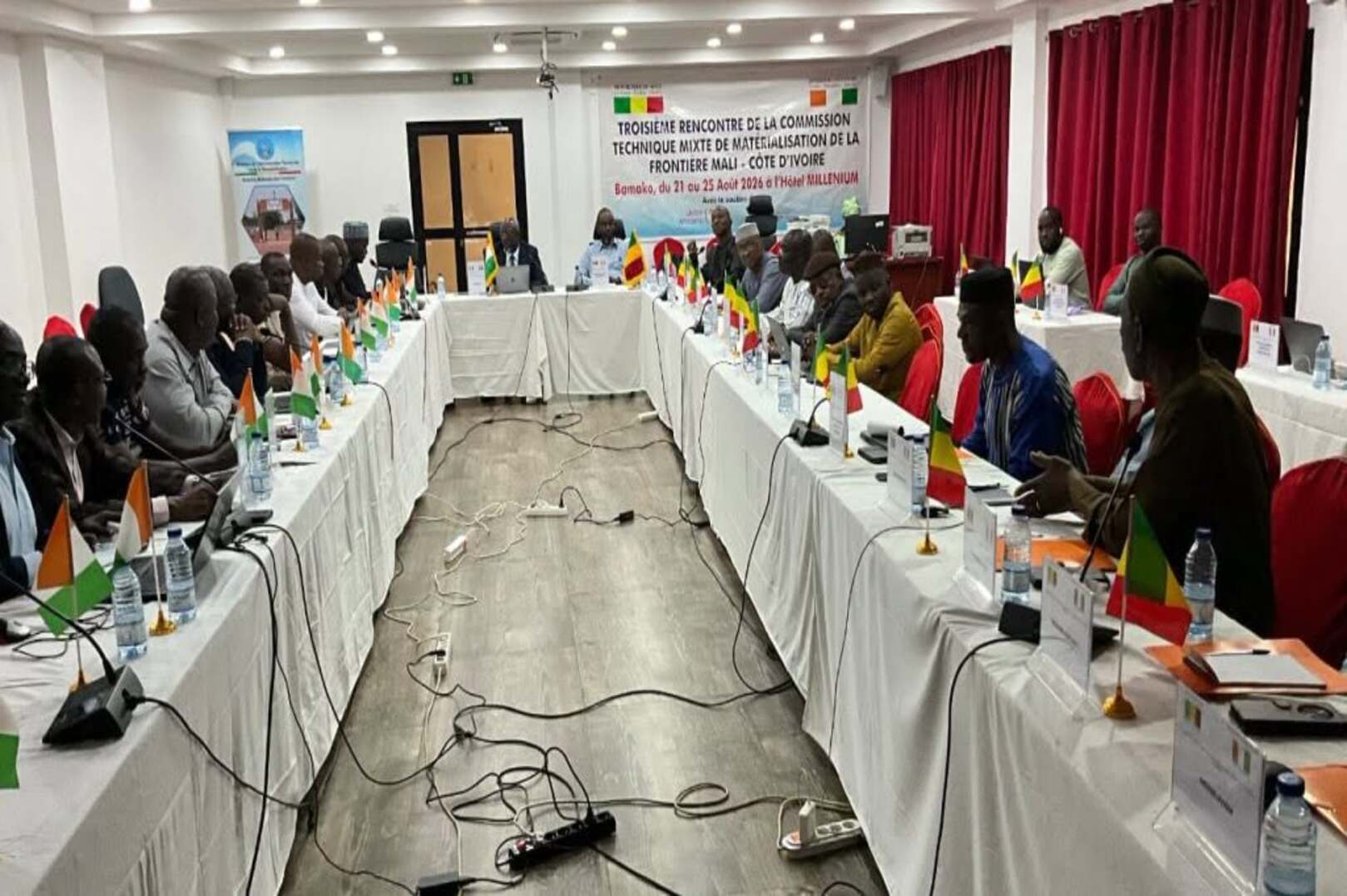
Côte d’Ivoire and Mali have reached a consensus on the definitive route of their common border, marking a major step toward formally defining and physically demarcating the boundary between the two West African countries.
The agreement was reached during a meeting of the Joint Technical Commission on the Demarcation of the Côte d’Ivoire-Mali border, held in Bamako from August 21 to 25, 2026. The experts from both countries also approved a draft treaty on the delimitation of the common border.
The five-day meeting examined the findings of a joint technical reconnaissance mission conducted from April 12 to 19 in the Pogo-Zégoua area. The discussions were aimed at settling the remaining technical issues surrounding the border and preparing the framework for its physical demarcation.
The two delegations also approved a technical reference framework that will guide future operations to mark the border and install boundary markers. The framework is expected to provide a common reference for translating the agreed route into physical markers on the ground.
The Ivorian delegation was led by Konaté Diakalidia, executive secretary of Côte d’Ivoire’s National Border Commission. The talks were conducted through technical consultations and consensus between the two sides.
The agreement comes as both countries seek to strengthen cooperation in their border areas, where security, trade and the movement of local populations remain important issues. Côte d’Ivoire and Mali have also been working on broader cross-border cooperation aimed at supporting stability and economic development in frontier communities.
The adoption of the definitive route does not yet mean that the entire border has been physically marked. The next stages include the formal signing of the delimitation treaty by the two governments, followed by technical work to establish the reference network and install border markers. The reference framework is expected to be put in place before the end of 2026.
The development represents an important diplomatic and technical milestone for Côte d’Ivoire and Mali. A clearly defined and eventually demarcated border could improve border management, strengthen security cooperation and provide a clearer framework for economic and social exchanges between communities on both sides.