

Côte d’Ivoire has called on domestic and international investors to support the transformation of its food crop sector, which the government considers one of the main growth drivers of the National Development Plan (PND) 2026–2030.
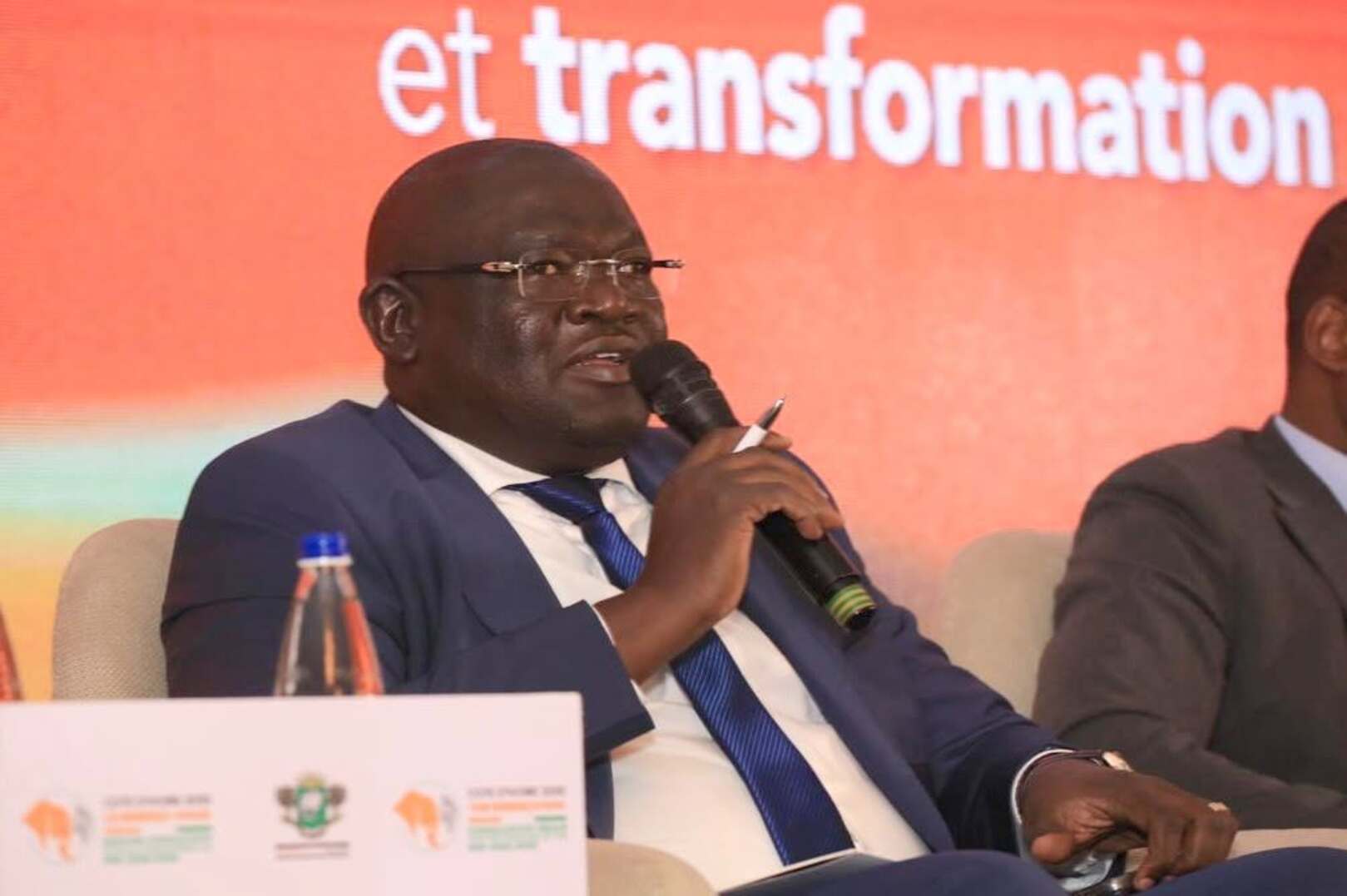
Speaking at the Consultative Group meeting on the financing of the PND 2026–2030 in Abidjan, Deputy Minister for Food Crop Production Bernard Kini Comoé presented the country's investment opportunities alongside Minister of Animal and Fisheries Resources Sidi Tiémoko Touré and Minister of Trade and Industry Ibrahim Kalil Konaté.
Addressing private investors, Bernard Kini Comoé outlined the government's strategy to create a business-friendly investment environment through major infrastructure projects. Among the priorities is the development of large-scale irrigated areas to boost rice production.
The minister said feasibility studies are underway for an estimated 200,000 hectares of irrigable land. Projects have already been identified, including a 16,000-hectare irrigation scheme in the Bagoué region and another covering 30,000 hectares in the Kossou region.
Under the government's plan, the State will finance dams, irrigation canals and other agricultural water infrastructure before transferring their operation to the private sector through concessions and public-private partnerships.
"Our role is to create the conditions for investment by providing the necessary infrastructure, allowing private operators to develop a modern and competitive agricultural sector," Bernard Kini Comoé said.
To strengthen the sector's attractiveness, the government is also offering several investment incentives, including tax exemptions on agricultural equipment and fuel tax relief for mechanized farming, with exemptions of up to 95%.
The minister said these measures are designed to reduce production costs, accelerate agricultural modernization and encourage greater private investment in food crop value chains.
Beyond primary production, Bernard Kini Comoé highlighted significant opportunities in agro-processing. Cassava, maize, vegetables and other staple crops offer considerable industrial potential that remains largely untapped.
He also recalled the government's policy of promoting the incorporation of cassava flour into bread flour to reduce wheat imports while increasing local value addition.
The minister further called for greater investment in cold chain infrastructure, collection and aggregation centers, and specialized agricultural transport services to reduce post-harvest losses and improve the competitiveness of the sector.
According to Bernard Kini Comoé, food crop production is also a major source of employment, particularly for young people and women. He said that combining public investment in infrastructure, land tenure reforms, tax incentives and stronger private sector participation would strengthen food security while reducing the country's dependence on imported food products.