

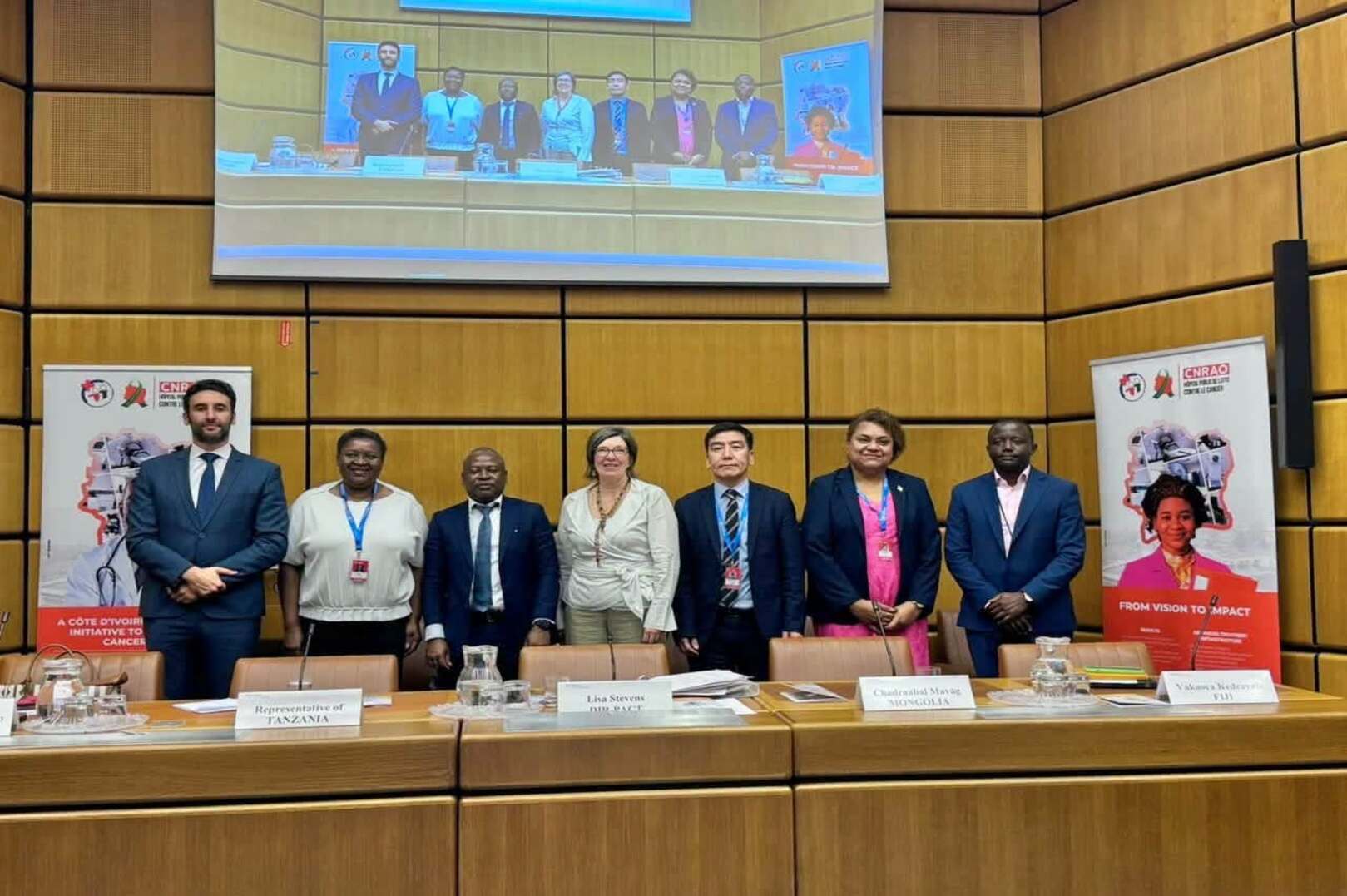
Côte d’Ivoire presented its experience in cancer care and the financing of radiation medicine to an international audience in Vienna on Sept. 17, highlighting the approach developed by the National Medical Oncology and Radiation Therapy Center Alassane Ouattara, known as CNRAO.
The Ivorian center was invited by the International Atomic Energy Agency (IAEA) to take part in a special panel held on the sidelines of the agency’s 70th General Conference. The session, titled “Success Stories in Financing the Scaling up of Radiation Medicine,” examined experiences in securing funding to expand radiotherapy and other medical services using ionizing radiation.
The event was moderated by Dr. Lisa Stevens, director of the IAEA’s Programme of Action for Cancer Therapy (PACT). According to Côte d’Ivoire’s Ministry of Health, the IAEA wanted the country to present the CNRAO’s approach to making cancer treatment more accessible, particularly its efforts to reduce financial barriers for patients.
At the center of the model presented in Vienna is the principle that patients facing financial difficulties should not be prevented from receiving treatment because they cannot immediately afford the cost. According to the Ministry of Health, the CNRAO allows such patients to begin treatment and settle payments later, including through instalments when necessary.
The Ivorian center has also developed an integrated support system alongside medical treatment. Patients can receive psychological support, participate in support groups and workshops, and access nutritional services, socio-aesthetic care, trichology, adapted physical activity, as well as social and spiritual support.
The support unit is open not only to patients treated at the CNRAO but also to cancer patients receiving care at other health facilities in Côte d’Ivoire, according to the Ministry.
The ministry also highlighted the introduction of socio-aesthetic care in oncology and trichology in the public hospital sector. It said Côte d’Ivoire was the first country in the sub-region to introduce these services in cancer care and public hospitals.
Beyond patient care, the CNRAO’s development has involved international and private-sector partners. The IAEA has contributed to the training of Ivorian radiation oncologists, medical physicists and some radiotherapy technicians. The Ministry of Health said this training contributed to the emergence of Côte d’Ivoire’s first female medical physicist.
The center has also received support from the SIFCA Foundation and the L’Oréal Foundation. According to the ministry, their contributions helped establish the Dominique Ouattara Nutrition Center and the CNRAO’s socio-aesthetic unit, respectively.
The IAEA panel placed the Ivorian experience within a broader discussion on how countries can mobilize sustainable financing to expand radiation medicine. The agency’s programme for the event highlighted the importance of building viable investment cases, making cancer a priority in national development strategies and ensuring sustainable financing for radiotherapy services.
For Côte d’Ivoire, the presentation offered an opportunity to showcase the CNRAO not only as a cancer treatment facility but also as part of a broader public-health approach that combines medical treatment, financial access and support for patients throughout their care.
The experience presented in Vienna reflects Côte d’Ivoire’s efforts to strengthen access to cancer treatment while developing national expertise in radiation medicine and building partnerships with international and private-sector institutions.