

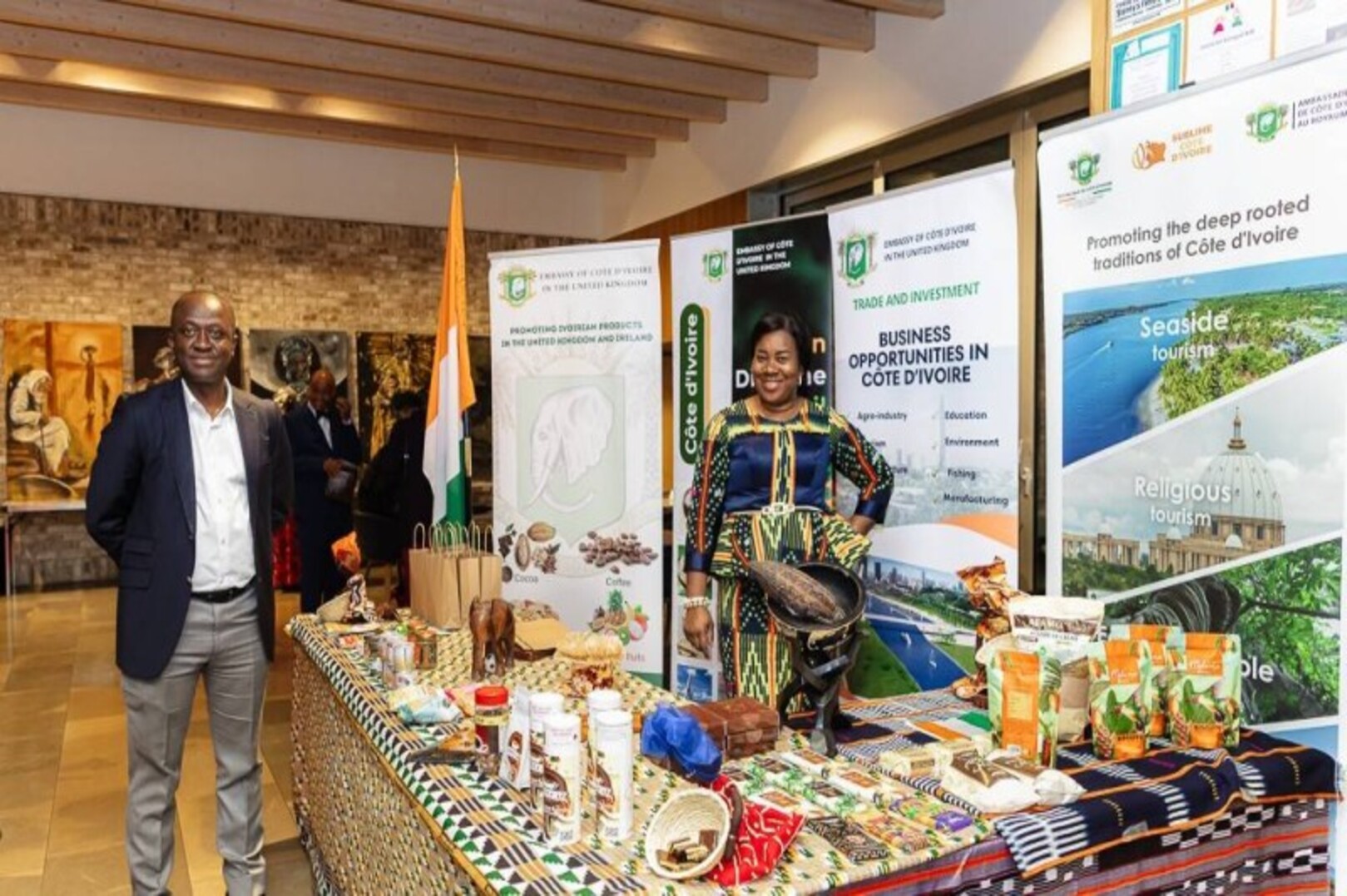
Côte d’Ivoire has presented its strategy for making its cocoa industry more sustainable, while seeking stronger cooperation with British investors and scientists as the world’s largest cocoa producer faces growing pressure to protect forests and improve traceability.
The strategy was presented by Côte d’Ivoire’s ambassador to the United Kingdom, Sara Affoué Amani, during the SustainConnect Live gala dinner in Cambridge on Oct. 3, held under the theme “Industry for the Planet.” The event brought together diplomats, academics and business leaders, providing Côte d’Ivoire with an opportunity to outline its approach to combining economic performance, environmental protection and local processing.
Côte d’Ivoire accounts for more than 40% of global cocoa supply, making the sector a major pillar of its economy. But the industry faces challenges including deforestation, climate change and the need to improve traceability across the supply chain. Amani highlighted measures including the Cocoa and Forests Initiative, the ARS 1000 standard and digital traceability systems designed to improve transparency and help combat deforestation. The country is also exploring the use of artificial intelligence to help detect diseases affecting cocoa plantations.
The government is also seeking to capture more value from cocoa before it leaves the country. At the Cambridge event, the Ivorian delegation showcased chocolate made by local artisans to illustrate the potential for greater domestic processing and job creation. Amani also highlighted the Cocoa Value Enhancement Alliance, created in July 2026 by Côte d’Ivoire, Ghana, Nigeria and Cameroon. The four countries together account for about 64% of global cocoa production, according to figures presented at the event.
The meeting also had a strong partnership component. Amani called on British investors to take a closer look at opportunities in Côte d’Ivoire and urged the scientific community in Cambridge to work with Ivorian institutions on research and innovation. Potential areas of cooperation include climate-resilient agriculture, green technologies and industrial processes with a lower environmental footprint.
Cambridge already has academic links with Côte d’Ivoire. The University of Cambridge’s Africa research network lists several projects involving Ivorian institutions, including research on biodiversity, ecosystem health, conservation and agricultural crops.
The push for greater traceability also comes as Côte d’Ivoire prepares for tighter international requirements on deforestation-free supply chains. The country has been deploying a national traceability system alongside the ARS 1000 standard, with the European Union accounting for about 70% of its cocoa exports, according to the Conseil du Café-Cacao.
For Côte d’Ivoire, the message from Cambridge was therefore broader than a call for more sustainable cocoa production: the government wants to attract investment, strengthen scientific partnerships and increase local value creation while reducing the environmental impact of one of the country’s most important export industries.