

Côte d’Ivoire has highlighted major gains in food production following the implementation of its Emergency Food Production Programme (2PAU-CI), with more than 580,000 farmers benefiting from the initiative.
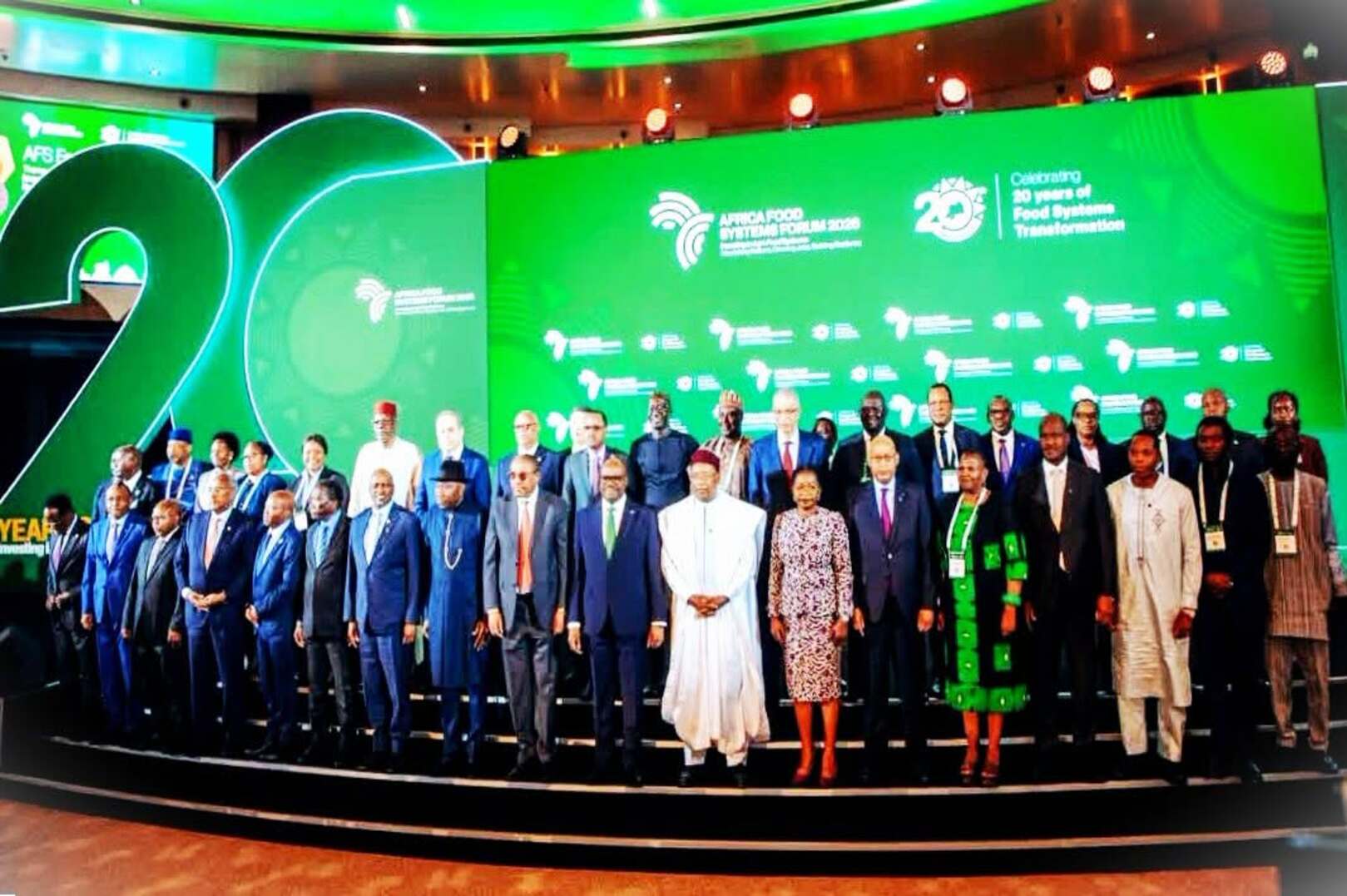
On Wednesday, September 2, 2026, Minister Delegate for Food Crop Production Bernard Kini Comoé presented the programme’s results in Kigali, Rwanda, during a high-level panel held on the sidelines of the African Food Systems Forum (AFSF).
Invited by the African Development Bank (AfDB), the minister spoke on the theme: “From emergency response to resilient food systems: scaling up technologies, partnerships and investments for Africa’s future.”
He said the COVID-19 pandemic, disruptions to global supply chains and rising agricultural input prices had exposed the vulnerability of African food systems and the dependence of several countries on imports of essential commodities.
In response, Côte d’Ivoire, with support from the AfDB and the Japan International Cooperation Agency (JICA), implemented the 2PAU-CI programme from December 2022 to December 2025.
The programme had a total cost of nearly CFA 170 billion, including about CFA 99 billion from the AfDB and CFA 71 billion from JICA. More than 580,000 farmers benefited from the initiative, around one-third of them women.
The programme distributed more than 54,500 tonnes of NPK fertilizer, 33,000 tonnes of urea, 3,100 tonnes of certified rice seeds and 1,940 tonnes of maize seeds.
The support helped bring more than 183,900 hectares of rice, 399,000 hectares of maize and 69,000 hectares of cassava under cultivation.
It generated additional production of more than 750,000 tonnes of rice, 1.60 million tonnes of maize and nearly 1.75 million tonnes of cassava.
Beyond production, the programme also supported agricultural mechanization, advisory services and digitalization through tools such as CropScope and E-Voucher, improving targeting, traceability and transparency.
For Bernard Kini Comoé, however, increasing production is only part of the challenge.
“Producing is not enough: we need to sell, process and bring the output to market under the right conditions,” he stressed.
Côte d’Ivoire now plans to build on the programme’s achievements through a second phase focused on processing, market access, modernization of agricultural value chains and the digitalization of agricultural services.
At the Kigali forum, the Ivorian government called for stronger investment and partnerships to help build more resilient food systems and sustainably strengthen food security across Africa.