

Côte d’Ivoire will invest in roads, healthcare and education infrastructure under its 2026-2030 national development plan as the government seeks to strengthen links between the country’s regions and turn local economic potential into investment opportunities.
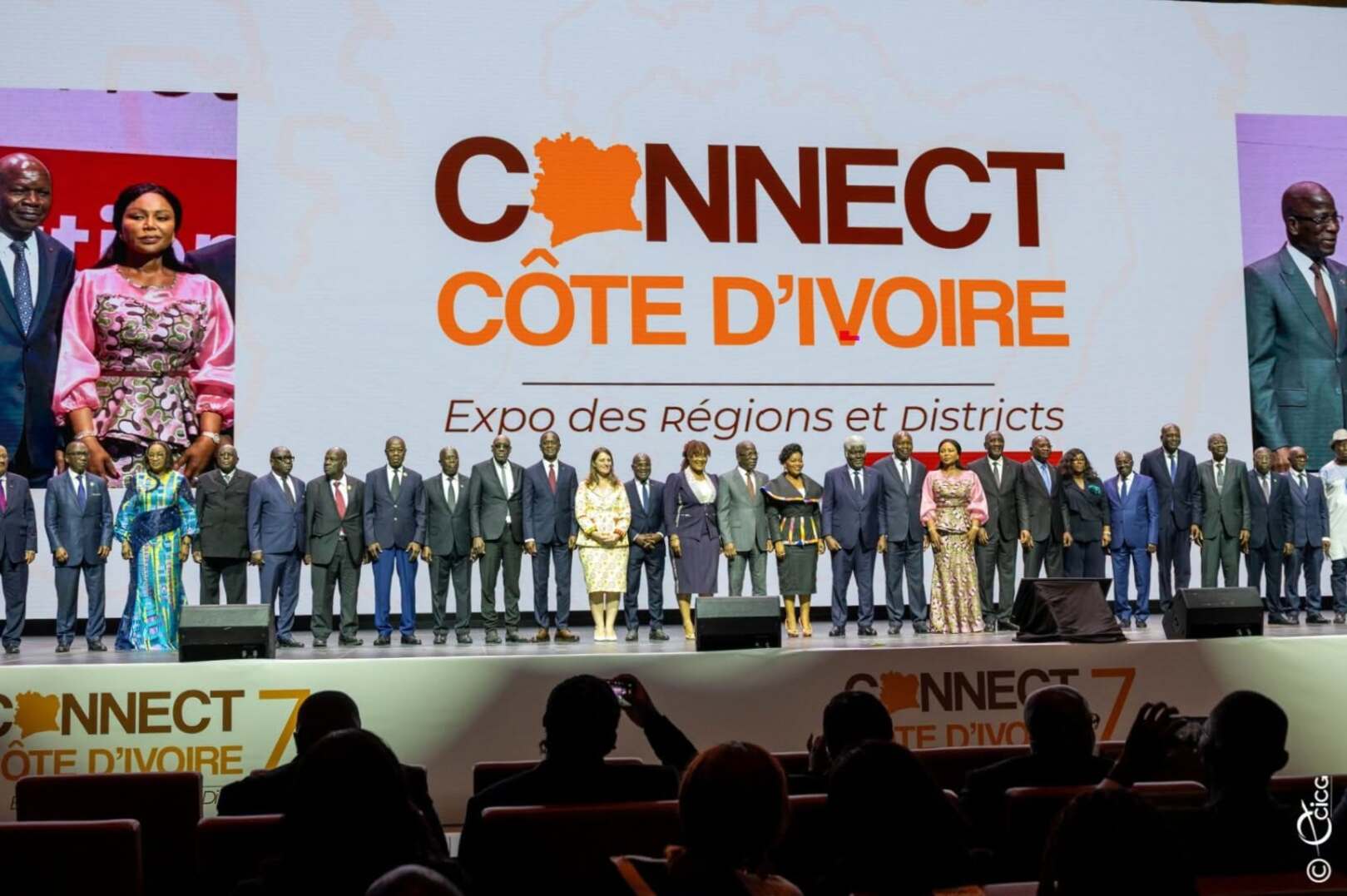
Prime Minister Robert Beugré Mambé outlined the planned projects on Sept. 30 at the opening of the seventh edition of Connect Côte d’Ivoire in Abidjan, a forum focused on promoting the economic potential of the country’s regions and districts.
Held from Sept. 30 to Oct. 2 under the theme “Revealing territories, connecting opportunities,” the event brings together public institutions, local authorities, businesses, development partners, investors and members of the diaspora. More than 200 exhibitors and 20,000 visitors are expected, with more than 150 business-to-business and business-to-government meetings planned, according to organisers.
Mambé said the objective was to ensure that opportunities identified in the regions become concrete, financed projects.
“Revealing territories means revealing the wealth of our territories. Connecting opportunities means accelerating value creation,” Mambé said at the opening ceremony.
Under the PND 2026-2030, the government plans to build 1,014 km of roads to improve connections between districts and regions, as well as 141 bridges and other structures, including 106 outside Abidjan.
The programme also includes the construction of five university teaching hospitals, 21 general hospitals and 1,200 primary healthcare facilities, according to the prime minister.
In education, the government plans to build 9,485 classrooms, 294 secondary schools and five new universities in the regions.
The projects are part of a broader effort to reinforce infrastructure following investments made since 2011, while supporting the government's development priorities for the 2026-2030 period.
Mambé said development could not be sustained without stronger links between the country's territories and called for cooperation between the state, local authorities, the private sector, financial institutions, development partners, academia, civil society and local communities.
Connect Côte d’Ivoire was created as a platform to showcase the economic, agricultural, industrial, tourism, cultural and technological potential of the country’s regions and districts.
The 2026 edition is designed to move beyond simply presenting local assets, with organisers seeking to connect projects with investors and financing. The programme includes an institutional day, a cultural and tourism day and an economic day dedicated to companies, projects and business meetings.
The forum also fits within the PND 2026-2030, which places emphasis on private investment and the emergence of national business champions.
Mambé said the government's challenge was now to ensure that opportunities identified during the forum were “known, accessible, financed and transformed into concrete achievements.”
The prime minister also highlighted planned projects in northern Côte d’Ivoire, including a dry port in Ferkessédougou and rail connections linking Abidjan with the northern part of the country.
For the government, the development of regional infrastructure is intended not only to improve access to public services but also to strengthen the economic integration of Côte d’Ivoire’s territories and make local investment opportunities more accessible.