

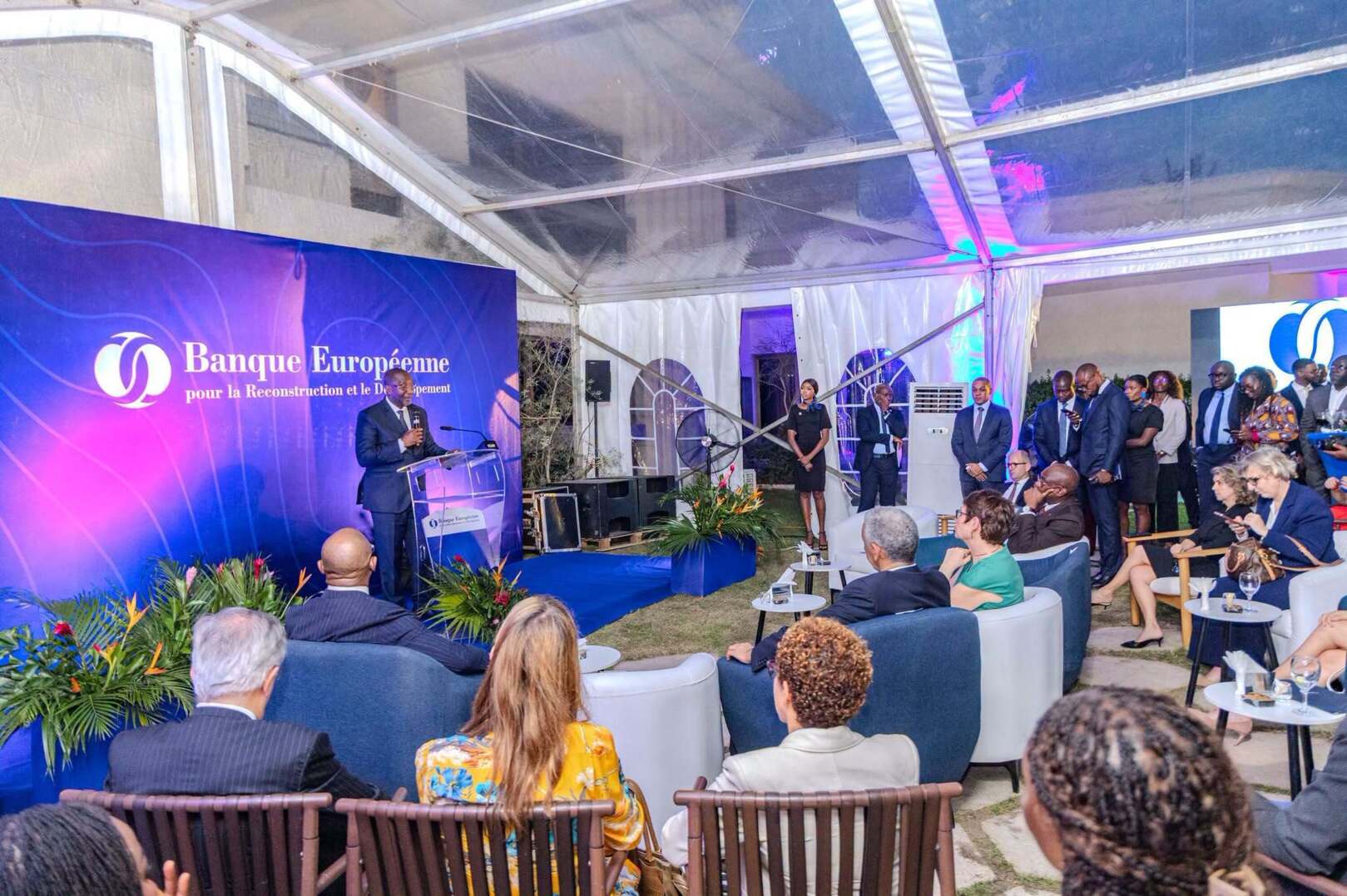
The European Bank for Reconstruction and Development (EBRD) has officially opened its resident office in Abidjan, marking a new phase in its expansion into sub-Saharan Africa. The move is expected to strengthen financing for businesses and support investment under Côte d’Ivoire’s 2026–2030 National Development Plan.
The European Bank for Reconstruction and Development (EBRD) has strengthened its presence in Côte d’Ivoire with the inauguration of a resident office in Abidjan. The new office is intended to bring the institution closer to local businesses, investors and public authorities as the country seeks to mobilise more private capital for its economic development.
The inauguration ceremony took place on November 23, 2026, in the presence of EBRD President Odile Renaud-Basso and Côte d’Ivoire’s Minister of Planning and Development, Souleymane Diarrassouba. The event marked another milestone in the bank’s expansion across sub-Saharan Africa.
Côte d’Ivoire became an EBRD shareholder on December 18, 2024, paving the way for the institution to begin operations in the country in 2025. Since then, the bank has supported projects in several sectors, including agribusiness, mining, financial services and energy transition. Its investments have contributed, among other initiatives, to expanding cashew processing capacity and financing companies operating in the mining services sector.
A key priority of the new office will be improving access to long-term financing for Ivorian businesses. The EBRD also plans to support small and medium-sized enterprises (SMEs) through financing programmes designed to strengthen their investment capacity, business development and job creation potential.
As part of this strategy, the bank has established a €250 million financing partnership with Société Générale Côte d’Ivoire. The arrangement includes two €100 million guarantee facilities and a €50 million trade finance facility. One of the guarantee mechanisms is expected to enable the bank to provide up to €120 million in new loans to Ivorian businesses, including at least €100 million for micro, small and medium-sized enterprises.
During the consultative group meeting on financing the 2026–2030 National Development Plan, held on July 8 and 9, 2026, the EBRD announced a five-year financing envelope of €3 billion to support the private sector and strategic development projects.
The Ivorian government estimates that the implementation of projects currently under consideration could bring the EBRD’s total outstanding operations in the country to more than €500 million by the end of 2026.
Côte d’Ivoire’s 2026–2030 National Development Plan is valued at CFAF 114,838.5 billion, equivalent to approximately €175 billion. Private-sector investment is expected to account for 70.2% of the total financing, highlighting the importance of international financial institutions in mobilising capital.
For the Ivorian authorities, cooperation with the EBRD is expected to focus on improving access to long-term financing through local banks, supporting businesses involved in processing local raw materials and promoting investment in energy, digital infrastructure and the circular economy.
Beyond the opening of a new office, the EBRD’s presence in Abidjan represents a deeper commitment to the Ivorian economy. The institution will be better positioned to identify investment opportunities, assess projects and facilitate co-financing arrangements with other development partners.
The challenge now is to translate announced financing commitments into concrete investments, particularly those that strengthen local businesses, industrial capacity and sustainable economic growth.