

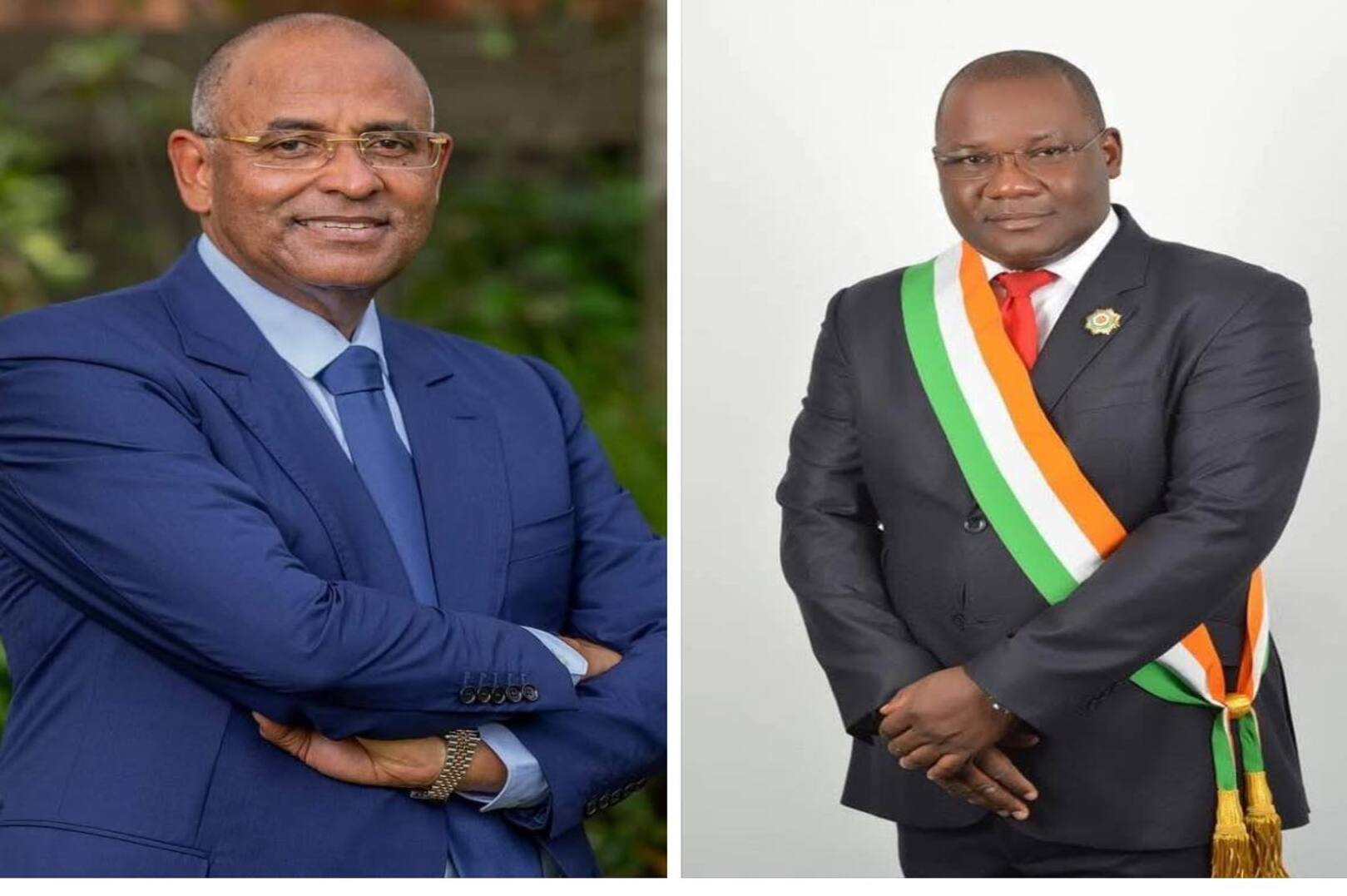
The inaugural session of the third legislature of the Third Republic opened this Saturday at the National Assembly Palace in Abidjan, marking the start of a new institutional cycle for the Ivorian Parliament. The main event of the day is the election of the President of the National Assembly, a key institution responsible for organizing legislative work and representing the parliamentary body.
Two candidates have officially been nominated, attracting the attention of the public and national political actors.
Patrick Achi, RHDP Candidate
The Rally of Houphouëtists for Democracy and Peace (RHDP), the majority party in the National Assembly following the legislative elections on December 27, 2025, has designated Patrick Achi as its candidate for the presidency of the National Assembly. A former Prime Minister and well-known political figure, Mr. Achi brings significant institutional experience within the Ivorian Executive, which strengthens his position as the RHDP holds a comfortable majority in Parliament.
Mr. Achi’s nomination comes in a context of political reshuffling and institutional strengthening following last December’s legislative elections.
Yao Yao Lazare, PDCI‑RDA Candidate
Opposing him is Yao Yao Lazare, a deputy and prominent figure of the Democratic Party of Côte d’Ivoire – African Democratic Rally (PDCI‑RDA), who represents the parliamentary opposition. A deputy and mayor of Buyo, Mr. Yao Yao also serves as President of the Association of Elected Officials and Cadres of the PDCI‑RDA of the Greater Center (AEC‑PDCI‑GC), reflecting his strong ties within his party’s elected officials.
His candidacy reflects the PDCI‑RDA’s aspiration to play a more central role in the Assembly’s leadership, despite its minority position.
A Key Vote for Parliamentary Functioning
The election of the President of the National Assembly is held in accordance with the institution’s internal regulations. Organized during the inaugural session of the new legislature, it allows deputies to select their leader from the two candidates. The elected President will be responsible for leading parliamentary work, representing the National Assembly, and fostering dialogue among the various political forces represented.
The composition of the Bureau and the adoption of the governing bodies will be decisive for the upcoming legislative calendar, particularly regarding the review of bills and oversight of government actions.