

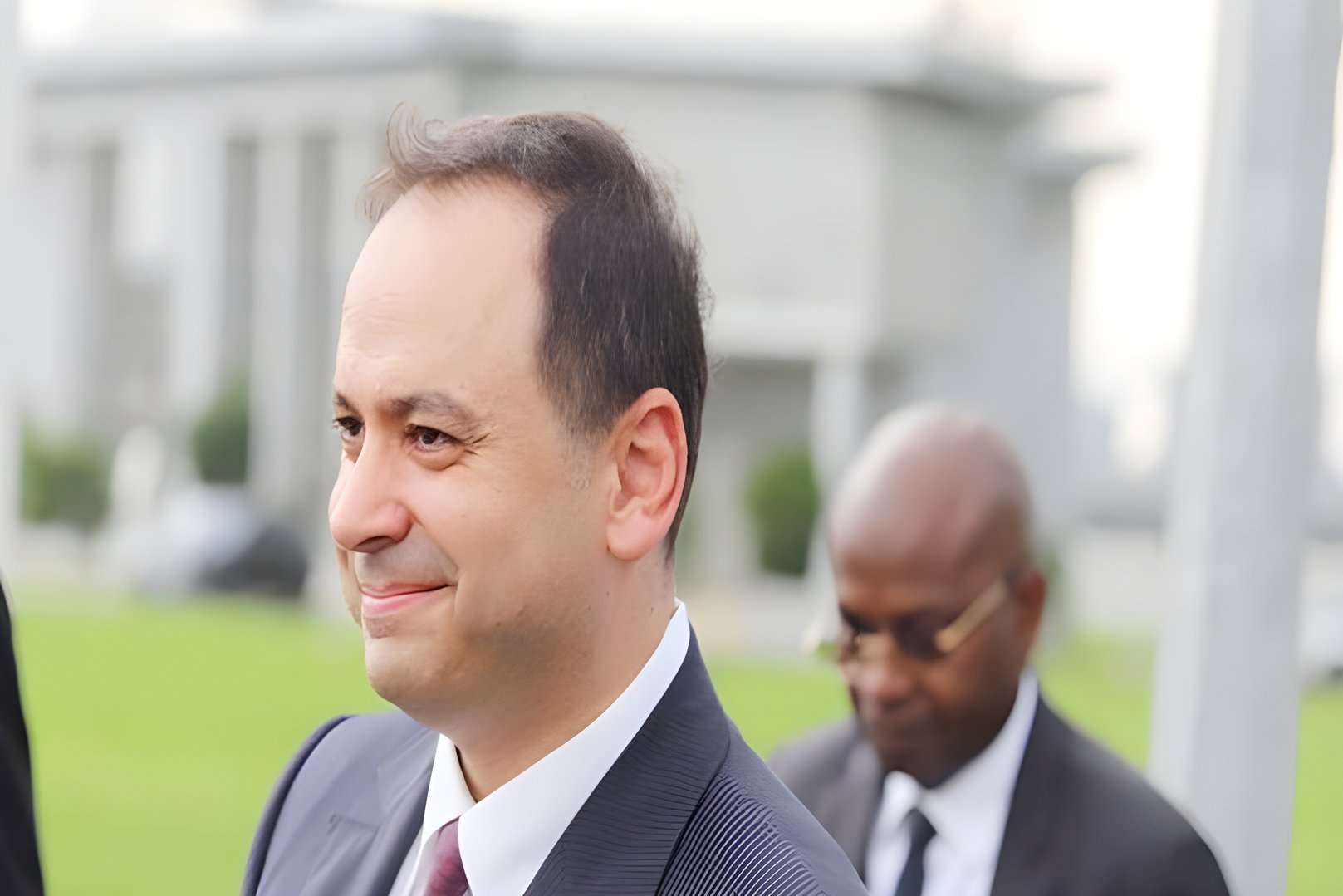
The Chairman of Porteo Group, a company present in seven African countries, marks fifteen years of activity, establishing the firm as one of the most integrated pan-African players in the construction sector. According to Hassan Dakhlallah, the continent is entering the most demanding phase of its integration agenda.
You have been observing the African landscape for nearly two decades. What makes this moment different from previous ones?
For a long time, Africa progressed through major declarations: agendas, visions, and long-term horizons. These narratives played their role by setting the continent in motion and opening political space. But today, we are entering a new phase—more concrete and more demanding.
The African Continental Free Trade Area is advancing, regional corridors are taking shape, and states are seeking to reduce territorial costs. Suddenly, all these intentions face the same question: who will actually execute?
This is what is changing. We are moving from a time of debating priorities to a time of measuring capabilities. And this shift is, in my view, the most important the continent has experienced in a long time.
Why do you ask “who will execute” as if the answer is not obvious?
Because it is not obvious. A public plan is only as strong as the operator capable of implementing it. For a long time, the continent relied on external actors—those who deliver, maintain, and meet deadlines.
This dependency is not neutral. It affects costs, timelines, the confidence of donors, and ultimately the real sovereignty of African states. The real question of the decade is not whether Africa has a vision—it does—but whether it is building, internally, the capacity to execute it.
You speak from the perspective of a founder who has built that capacity. What has fifteen years of building taught you?
Fifteen years is what it took to fully understand what it means to build a pan-African group from within. We started with limited resources in a demanding Ivorian market and are now present in seven countries, with nearly 10,200 employees, a revenue of €737 million, and over 3,000 kilometers of roads delivered.
These figures matter only because they reflect a trajectory: African anchoring, controlled execution capacity, and credibility built year after year.
One key lesson stands out: there are no shortcuts. You do not build a continent through communication, but through real assets, transferred skills, and long-term discipline. It is slow, sometimes unrewarding, but it is what endures.
You often emphasize vertical integration. Why is it so central for you?
Because it addresses a structural weakness on the continent. For a long time, African construction players have operated in fragmented ecosystems: engineering on one side, procurement on another, and processing elsewhere.
This fragmentation slows decisions, complicates project management, weakens deadlines, and prevents African economies from capturing the full value they help create.
We made the opposite choice. It is not a posture, but a practical response to fragmentation. Sovereign productivity is not declared—it is built gradually by reducing dependency on external chains at every project stage.
What, in your view, defines the credibility of a pan-African group?
Real credibility lies in the ability to maintain the same discipline across territories: consistent quality standards, reliable timelines, and a shared understanding of operational realities.
This requires strict protocols, controlled execution rhythms, a strong maintenance culture, and transferable methods. Without this, a group dilutes as it expands.
Growth does not mean lowering standards because contexts differ. It means adapting execution to local realities without compromising a shared level of excellence.
In a more constrained global environment, do you believe Africa’s momentum can hold?
Yes, but only if Africa stops chasing others’ agendas and focuses on building its own.
The world is fragmenting, financing is tightening, and geopolitical alignments are shifting. In this context, Africa cannot afford dependency-driven trajectories.
It must consolidate its achievements: markets, corridors, operators, and human capital. I strongly believe this process is already underway—uneven and sometimes quiet, but real.
The coming years will determine whether it becomes a true continental capability.
If you had to summarize what you hope to see in the next decade, what would it be?
I hope Africa will be judged by what it builds rather than what it announces; by its achievements rather than its promises; and by the strength of its actors rather than the abundance of its resources.
And that within this movement, a generation of African entrepreneurs, engineers, and executives will fully step into its rightful place.
The continent has the talent, markets, and the conviction