

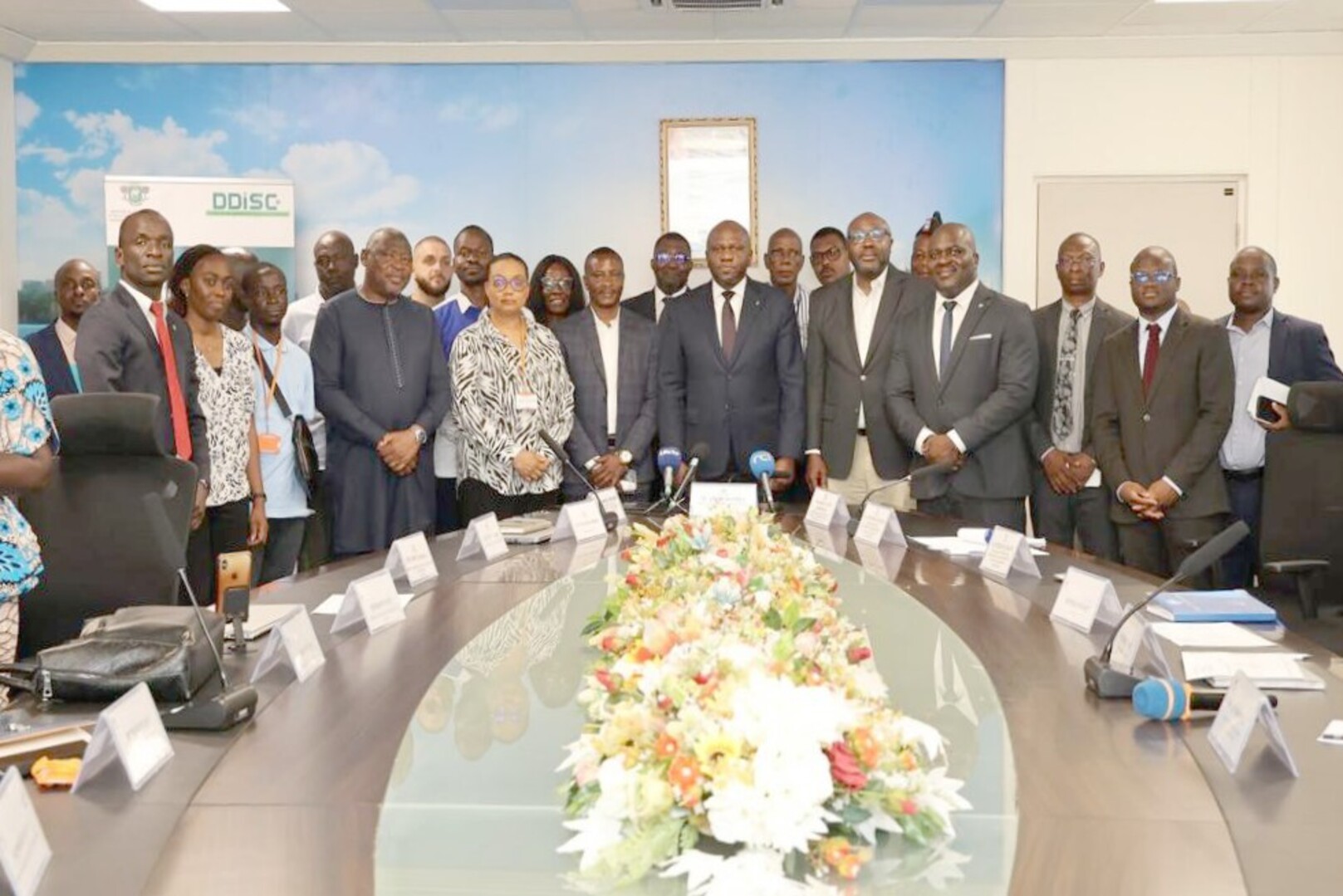
The Minister of Environment and Ecological Transition, Abou Bamba, presided over the pre-launch ceremony of the Integrated System for the Management and Monitoring of Hazardous Industrial Waste (SIGSDID) on Wednesday, April 15, 2026, at his office in Abidjan-Plateau.
Developed as part of a digital transformation initiative by the Ministry’s technical departments, with support from the firm Tourex Corporate, this digital platform aims to enhance transparency in the management of hazardous industrial waste, strengthen the monitoring of waste flows, ensure the availability of reliable data, and improve compliance with regulatory requirements.
Through this initiative, the Ivorian government continues its efforts to modernize the national waste management system. Beyond its technical dimension, SIGSDID aligns with the authorities’ vision of promoting modern, efficient, and results-oriented environmental governance.
Côte d’Ivoire’s rapidly expanding industrial sector included nearly 5,000 formal industrial companies in 2022, with an estimated growth of +7.0% in 2024. While this economic momentum is encouraging, it also leads to a significant increase in the volume of industrial waste generated.
According to data from the Ivorian Anti-Pollution Center (CIAPOL), national industrial waste production is estimated at over 625,000 tons per year, with projections exceeding one million tons by 2035. This trend increases the risks of soil, water, and air pollution, as well as threats to public health.
Even more concerning is that a large portion of this waste escapes the official management system. Only 30 to 40% of industrial waste is effectively handled by authorized operators. As a result, more than 375,000 tons per year go unmonitored, often dumped in nature, buried illegally, or discharged into waterways.
In response to this situation, Minister Abou Bamba emphasized the strategic importance of SIGSDID, designed to address the shortcomings of the current system.
“SIGSDID will address the lack of control observed in the management of our industrial waste by making every movement of hazardous industrial waste mandatory and digitally traceable. It will progressively bring back into controlled channels volumes of industrial waste that are currently unaccounted for in both statistics and regulatory oversight,” he stated.
The platform will notably ensure full traceability of waste, from production to final disposal, while centralizing real-time data through the introduction of an electronic waste tracking form (e-BSD), replacing the paper-based system in use since 2022 within the sector.
In its initial phase, the system will primarily target used oils and hydrocarbon residues—a stream already regulated but still lacking sufficient traceability. A phased deployment schedule by waste type will be communicated to stakeholders. By 2028, all hazardous industrial waste will be integrated into the system.
“SIGSDID marks the end of environmental impunity in the hazardous industrial waste sector in Côte d’Ivoire. Any company or operator that fails to comply with its obligations will be identified and sanctioned. The era of leniency toward polluters is over,” Minister Abou Bamba added.
Also present at the event, the representative of Tourex Corporate, Bilé Jacob Kangah, Director of Concession Services, welcomed the collaboration with the Ministry of Environment.