

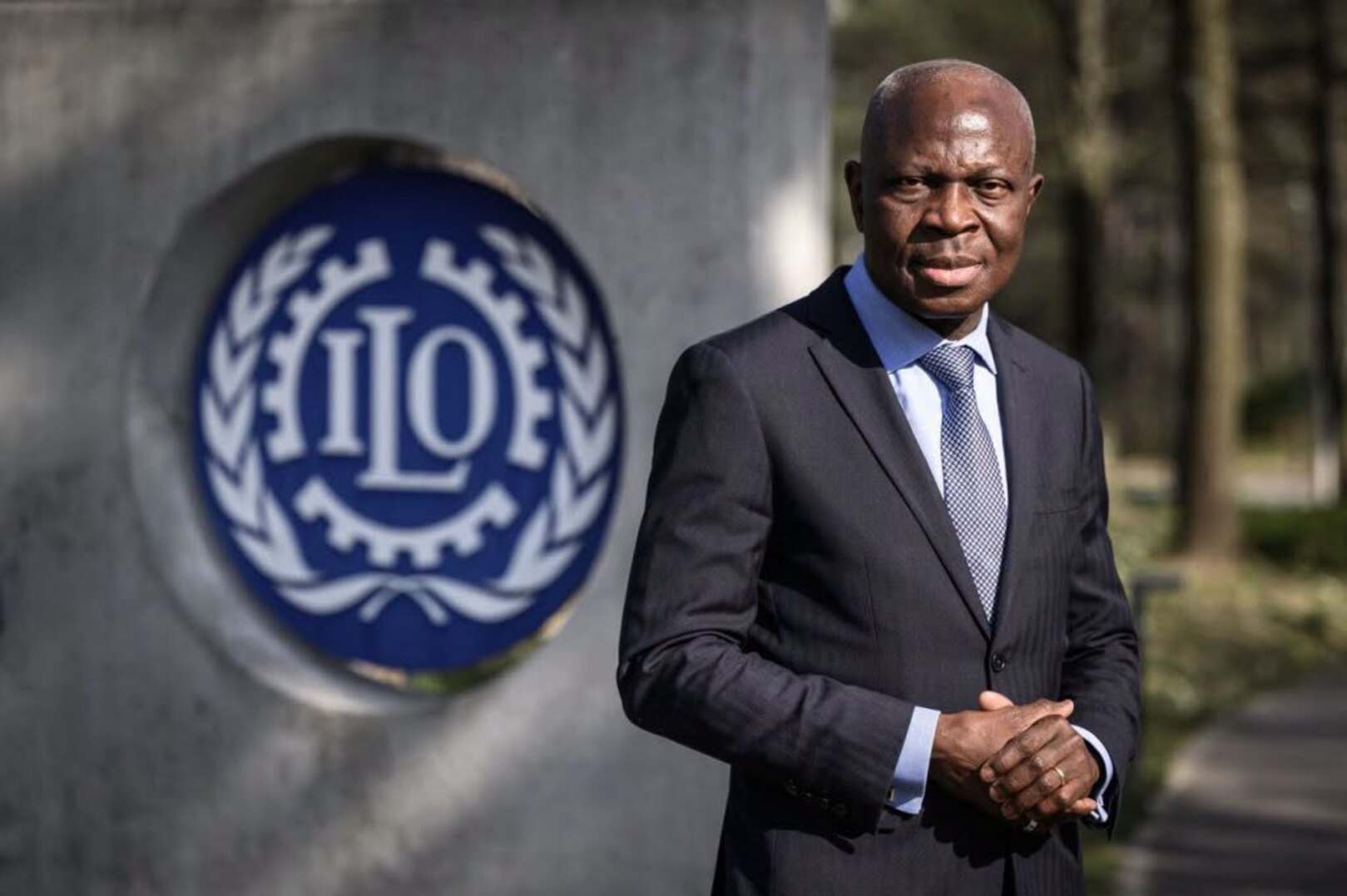
Togo's Gilbert F. Houngbo has been re-elected Director-General of the International Labour Organization (ILO) for a second five-year term, securing 51 votes in a secret ballot as the United Nations agency faces growing challenges linked to artificial intelligence and financial pressures.
The election took place on Monday during a meeting of the ILO's Governing Body at its headquarters in Geneva. Houngbo received 51 votes out of 56, with five abstentions.
His new term will begin on October 1, 2027, and run until September 30, 2032.
Houngbo, a former prime minister of Togo, became the first African to lead the ILO when he took office in October 2022. He was the organisation's 11th Director-General.
Houngbo's re-election came after Spanish Labour Minister Yolanda Díaz Pérez withdrew her candidacy on Monday, shortly before the vote. She said she wanted to avoid divisions within the international trade union movement.
The other declared challenger, former Peruvian foreign minister Javier González-Olaechea, had withdrawn from the race on November 4, leaving Houngbo as the only candidate remaining.
Díaz criticised the current leadership's handling of the organisation's financial difficulties and internal reforms, arguing that the ILO was facing a serious management crisis.
In his acceptance speech, Houngbo identified artificial intelligence as one of the major challenges shaping the future of work.
He said the ILO should play a leading role in discussions on how technological progress can serve people, as AI transforms labour markets and raises questions about employment, workers' skills and working conditions.
The organisation is also facing financial difficulties following the suspension and non-payment of contributions from the United States, traditionally its largest contributor. The funding shortfall has prompted discussions about organisational reforms and potential staff cuts.
Founded in 1919, the ILO is a specialised agency of the United Nations responsible for promoting workers' rights, decent employment, social protection and dialogue between governments, employers and workers.
Unlike most UN agencies, its decision-making structure brings together representatives of all three groups.
During his second term, Houngbo will be expected to address the impact of technological change on employment, strengthen international labour standards and improve the organisation's financial sustainability.
His re-election comes at a time when governments, businesses and workers are facing growing pressure to adapt to changes in the global economy and the rapid development of new technologies.