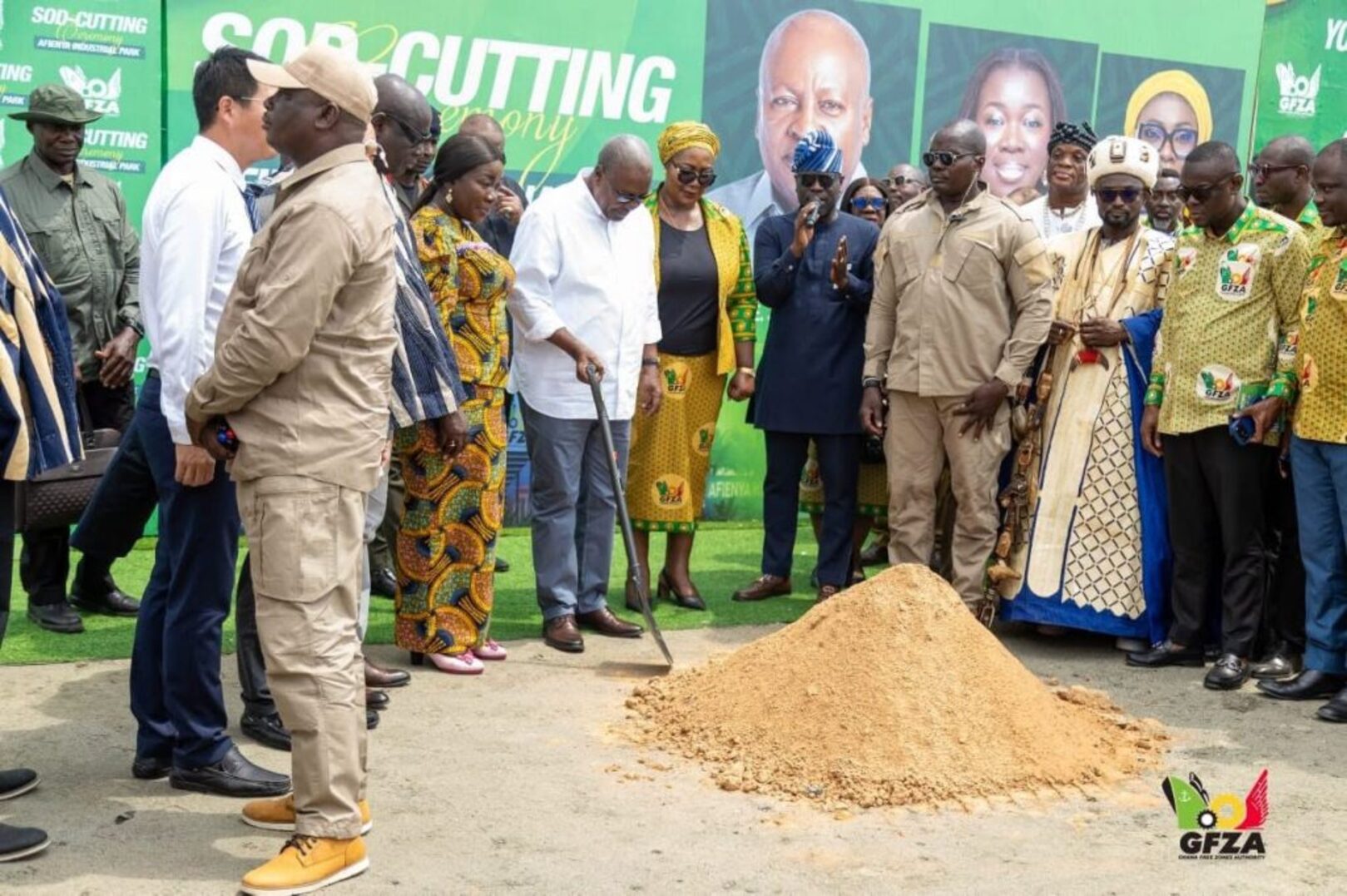
Ghanaian President John Dramani Mahama has launched construction of a 501-hectare industrial park at Afienya, near the port city of Tema, in a bid to attract manufacturing investment, expand exports and create jobs.
The project, officially launched on October 15, 2026, is designed to accommodate more than 120 companies across sectors including agro-processing, textiles, automotive manufacturing and pharmaceuticals, according to Ghanaian authorities.
The site covers about 1,238 acres and is intended to provide industrial land and essential infrastructure to businesses seeking to establish or expand production facilities in the West African country.
Its location near the port of Tema and its connection to the Tema–Mpakadan railway are expected to facilitate the movement of raw materials and finished goods. Planned facilities include serviced industrial plots, dedicated electricity supply, treated water and logistics infrastructure aimed at reducing the cost of setting up operations.
The project comes as Ghana seeks to strengthen domestic manufacturing, process more raw materials locally and reduce its reliance on imports. Authorities also hope to increase the value of exports by encouraging companies to produce finished goods rather than ship commodities with limited processing.
The Ghana Free Zones Authority has said that 14 companies have already been allocated land at the industrial park, although the wider project is intended to host more than 120 businesses.
The development is also expected to ease pressure on the industrial zone at Tema, where available space has become increasingly limited.
The government has identified manufacturing, agro-industry and other productive sectors as important sources of employment and economic growth. By providing infrastructure and industrial land in one location, the Afienya project aims to make it easier for companies to establish operations and connect with domestic and international markets.
However, the park’s economic impact will depend on the pace of construction, the delivery of promised infrastructure and the ability to attract investors that move beyond land allocation to actual production.
The number of operational factories, investment commitments converted into spending, jobs created and growth in manufactured exports will be key measures of the project’s success.