Côte d’Ivoire Presents Strong Economic and Social Progress Under PND 2021–2025
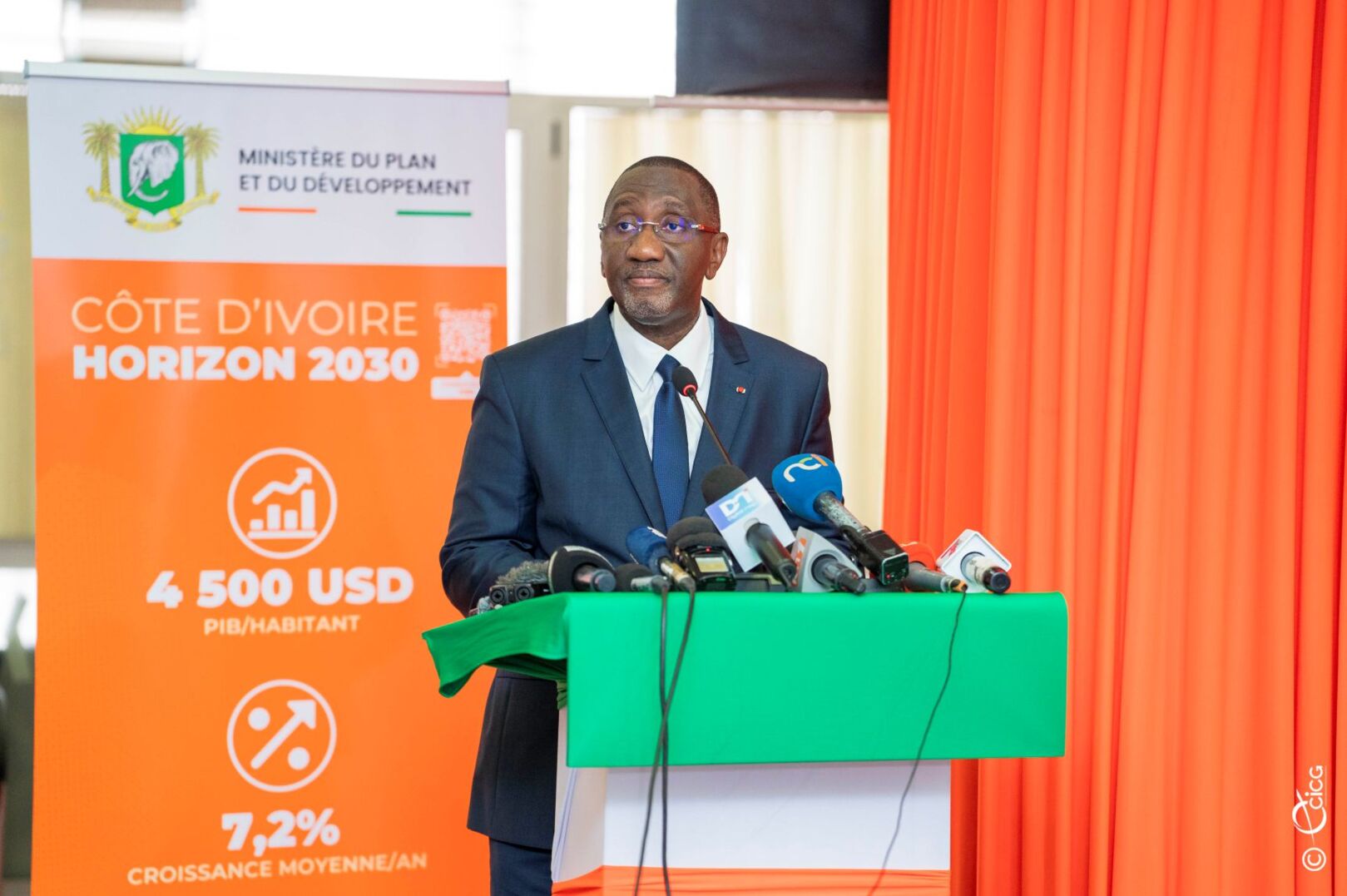
On the occasion of the press presentation of the 2026–2030 National Development Plan (NDP), held on Friday, May 22, 2026, in Abidjan-Plateau, the Minister of Planning and Development, Souleymane Diarrassouba, presented a positive assessment of the 2021–2025 NDP.
On the macroeconomic level, the Ivorian economy recorded an average growth rate of 6.5% over the period, ranking it among the most dynamic economies in Sub-Saharan Africa.
As for Gross Domestic Product (GDP) per capita, it increased from US$2,287 in 2020 to US$3,148.2 in 2025, reflecting a gradual improvement in per capita wealth.
The Ivorian budget deficit was reduced from 4.9% of GDP in 2021 to 3.0% in 2025, in line with the West African Economic and Monetary Union (UEMOA) convergence criteria.
Regarding public debt, Côte d’Ivoire’s debt-to-GDP ratio stands at 57% in 2025, below the regional threshold of 70%, confirming the sustainability of the country’s debt level.
Foreign direct investment also increased significantly, rising from 1.5% of GDP in 2021 to 3.9% in 2025, reflecting growing investor confidence in the Ivorian economy.
Among the key achievements, the poverty rate in Côte d’Ivoire decreased from 55.4% in 2011 to 37.5% in 2021, while life expectancy at birth reached 62.3 years in 2025, compared to 60.3 years in 2021.
Furthermore, the Human Development Index (HDI) rose from 0.557 in 2021 to 0.582 in 2023. Côte d’Ivoire has been classified as a medium human development country since 2020.
In the education sector, 6,777 classrooms were built, along with 227 high schools and secondary schools. The primary school enrollment rate increased from 101.9% in 2021 to 109.5% in 2024, while the lower secondary completion rate rose from 60.7% in 2021 to 81.1% in 2024.
In the health sector, the proportion of the population living within 5 kilometers of a health facility increased from 70.1% in 2020 to 82% in 2025. More than 23 million people were enrolled in Universal Health Coverage (CMU) by the end of 2025, and over 1,051 primary healthcare facilities were built or rehabilitated.
Regarding access to drinking water, the rate stands at 86.7%. Water production in Abidjan increased to more than 1,004,944 cubic meters per day.
In the social sector, the number of households benefiting from social safety nets increased from 227,000 in 2020 to 527,000 in 2025, while pro-poor spending rose from 3,066 billion FCFA in 2021 to 3,845 billion FCFA in 2025.
“This positive assessment is the result of rigorous planning, coherent structural reforms, and a relationship of trust between the State, the private sector, civil society, and development partners,” the Minister Diarrassouba stated.