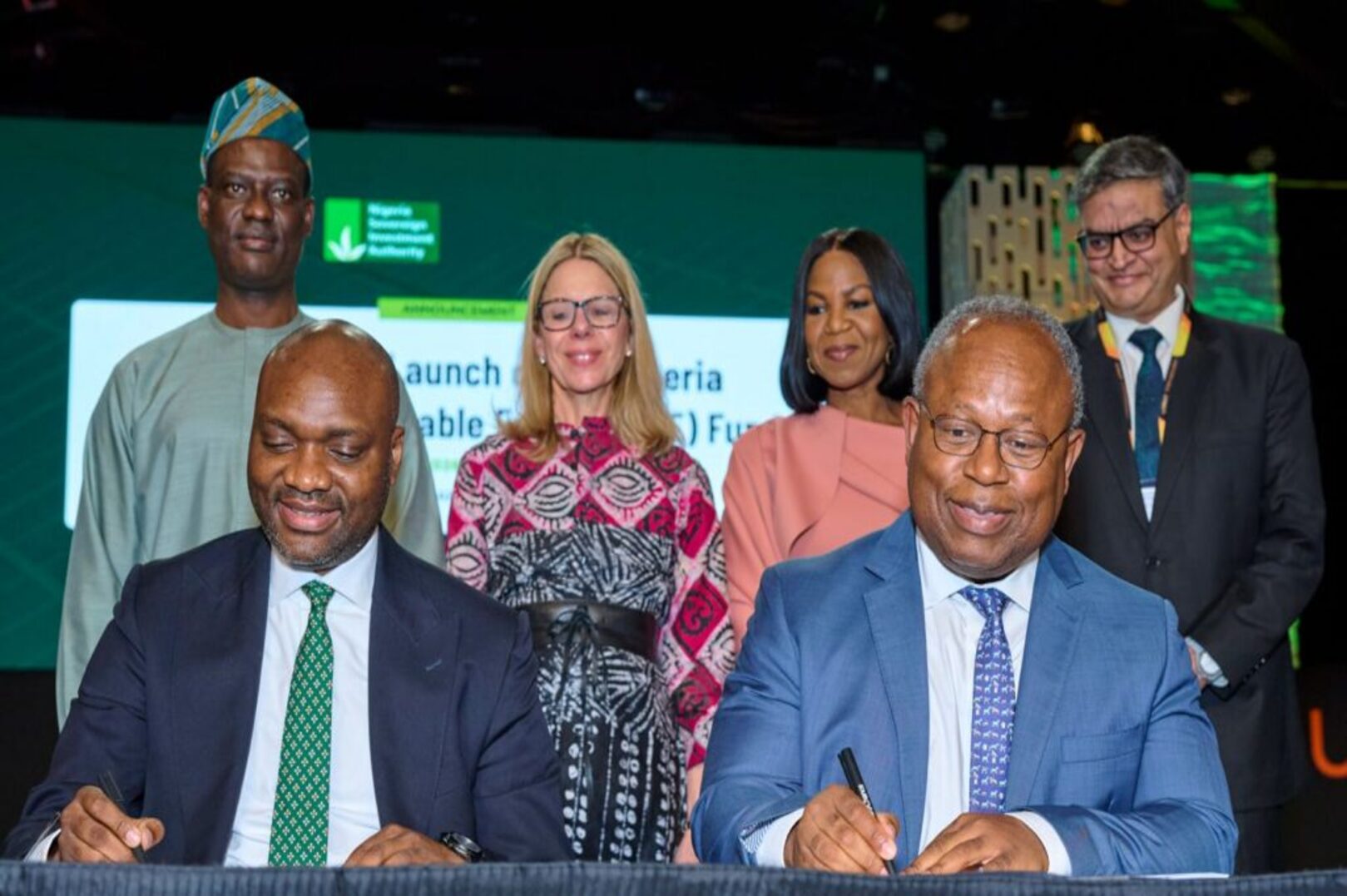
Nigeria has commercially launched a $300 million Distributed Renewable Energy Fund aimed at financing off-grid and distributed renewable energy projects and expanding electricity access for communities and businesses underserved by the national grid.
The Nigeria Distributed Renewable Energy Fund was launched on the sidelines of the United Nations General Assembly in New York by the Nigeria Sovereign Investment Authority (NSIA), Africa50 and Sustainable Energy for All (SEforALL). The launch marks the transition from the fund’s structuring phase to active capital deployment.
The fund will support projects including mini-grids, standalone solar systems and other distributed renewable energy solutions. Rather than relying exclusively on the conventional electricity network, these systems can generate and supply power closer to where it is consumed, particularly in areas that remain underserved by existing infrastructure.
The fund is co-managed by NSIA and Africa50 and is designed to mobilise both public and private capital for renewable energy investments. The World Bank, a founding partner, has provided an initial $25 million contribution through its International Development Association (IDA).
The initiative is also linked to Mission 300, a broader African effort to connect 300 million people to electricity by 2030. The partners say the Nigerian fund is intended not only to expand electricity access in Nigeria but also to provide a potential financing model for distributed renewable energy investment in other African countries.
Aminu Umar-Sadiq, managing director and chief executive of NSIA, said the commercial launch signals that Nigeria’s distributed renewable energy market is ready for investment at scale.
The launch comes as Nigeria seeks to expand electricity access while increasing investment in renewable energy. Mini-grids and standalone solar systems are increasingly being used as alternatives in locations where extending conventional grid infrastructure remains difficult.

