Africa’s Public Debt Trends Show Mixed Picture in 2025 as Risks and Resilience Coexist
Africa’s public debt landscape is showing signs of moderation, but significant disparities between countries continue to highlight both fiscal vulnerability and gradual economic adjustment across the continent.
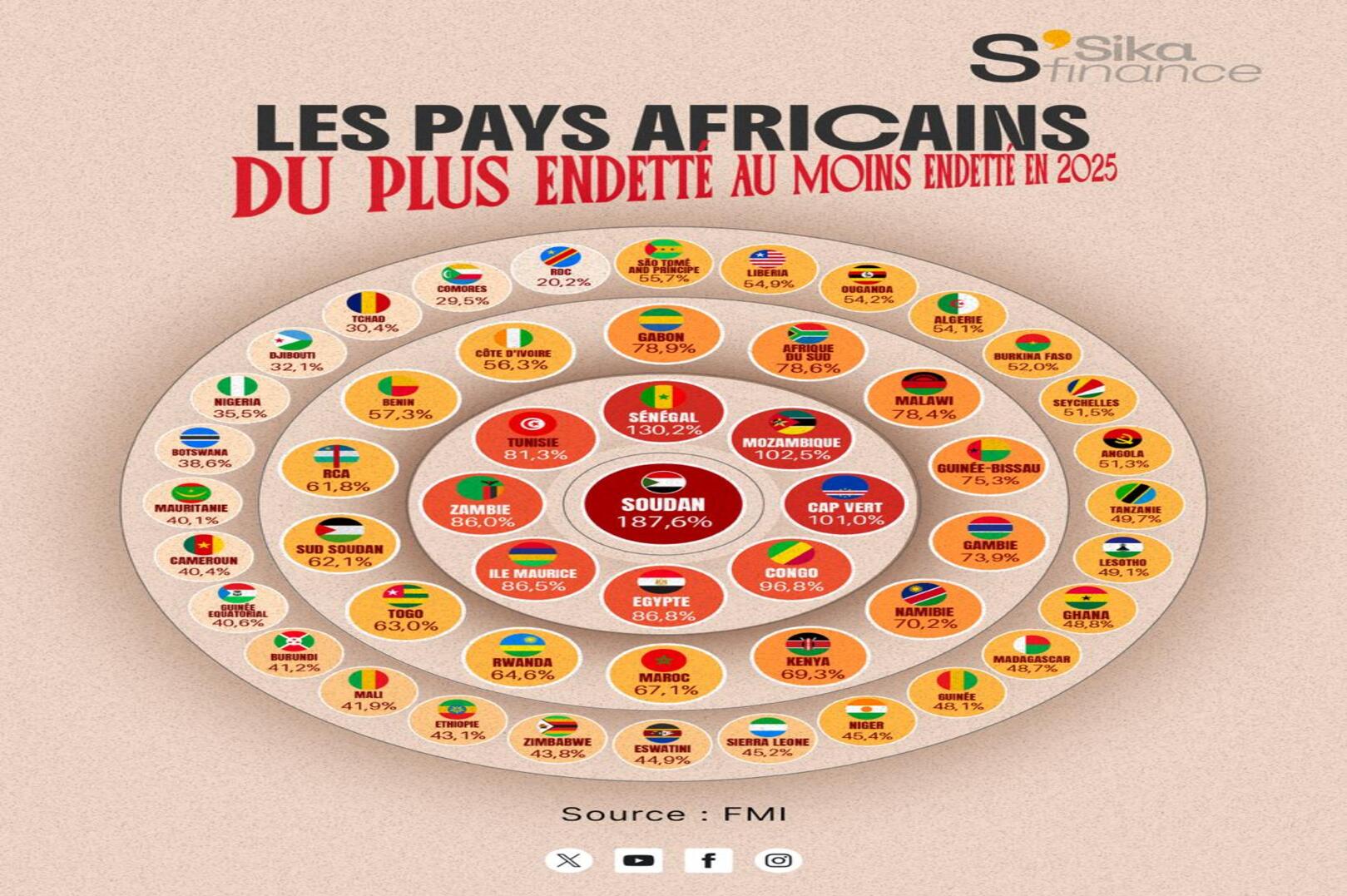
According to recent International Monetary Fund (IMF) assessments, the median public debt-to-GDP ratio in Africa has eased to around the mid-50 percent range in 2025, reflecting a slight improvement compared to previous years. However, analysts caution that the overall picture remains uneven, with debt dynamics varying widely between economies.
Several countries continue to face high debt burdens exceeding 90 percent of GDP, including nations such as Senegal and Mozambique, while others remain in a more moderate range between 60 and 90 percent, including South Africa, Egypt, and Morocco.
At the same time, a group of economies including Côte d’Ivoire, Nigeria, and Botswana maintain relatively lower debt ratios, generally below 60 percent of GDP. However, economists warn that lower debt levels do not automatically translate into stronger fiscal health, particularly in cases where tax revenues remain limited and economic diversification is weak.
“Debt sustainability in Africa cannot be assessed by ratios alone,” one regional economist noted. “What matters is the capacity of governments to raise revenue, manage expenditure, and sustain growth over time.”
The IMF and other financial institutions have repeatedly stressed that while debt levels have stabilized in several African economies, vulnerabilities persist due to rising borrowing costs, currency pressures, and dependence on external financing.
In response, many governments have begun implementing fiscal consolidation measures, alongside reforms aimed at improving domestic revenue mobilization and strengthening public financial management systems.
Experts also highlight that investment in productive sectors particularly infrastructure, agriculture, and energy remains essential to ensure that borrowing translates into long-term growth rather than structural debt stress.
As Africa navigates a complex global financial environment, policymakers face the challenge of balancing development needs with debt sustainability, in a context where climate shocks, population growth, and economic transformation continue to reshape fiscal priorities across the continent.