West Africa Accelerates Data Center Expansion to Power the Digital Economy
West Africa is rapidly expanding its data center infrastructure as governments and private operators position the region for the next phase of digital transformation. Driven by the growth of cloud computing, artificial intelligence (AI), digital finance and e-commerce, data centers are increasingly viewed as strategic assets for economic development and digital sovereignty.
Nigeria, Côte d'Ivoire and Ghana account for 61.5% of West Africa's data center infrastructure, reinforcing their position as the region's leading digital hubs. Their expansion is part of a broader continental effort to strengthen digital infrastructure and support Africa's growing digital economy.
According to the World Bank, Africa could attract up to USD 25 billion in digital infrastructure investments by 2030, reflecting the scale of demand expected over the coming years.
Rather than responding only to current market needs, operators are developing infrastructure with capacities that significantly exceed present demand. The strategy is designed to anticipate the rapid adoption of cloud services, enterprise digitalization, government digital transformation and AI-powered applications.
Modern facilities meeting Tier III and Tier IV standards are becoming the benchmark across the region. These data centers provide high availability, redundancy and enhanced security, making them essential for financial institutions, governments and multinational companies that require uninterrupted digital services.
The rise of artificial intelligence is expected to become one of the strongest drivers of future data center demand.
AI models require substantially greater computing power than conventional digital applications. Industry analysts estimate that AI workloads could increase server energy consumption by as much as tenfold over the coming years as generative AI, machine learning and large-scale data analytics become more widespread.
This shift is placing reliable electricity at the center of Africa's digital infrastructure strategy. Stable, affordable and sustainable power supplies will be critical for attracting long-term investment and ensuring the competitiveness of regional data center markets.
Beyond economic considerations, governments increasingly view data centers as essential to strengthening digital sovereignty.
Hosting data locally enables countries to improve control over sensitive information, reduce network latency and comply more effectively with national data protection regulations. As digital services continue to expand, domestic data infrastructure is becoming a strategic component of national security, innovation and economic resilience.
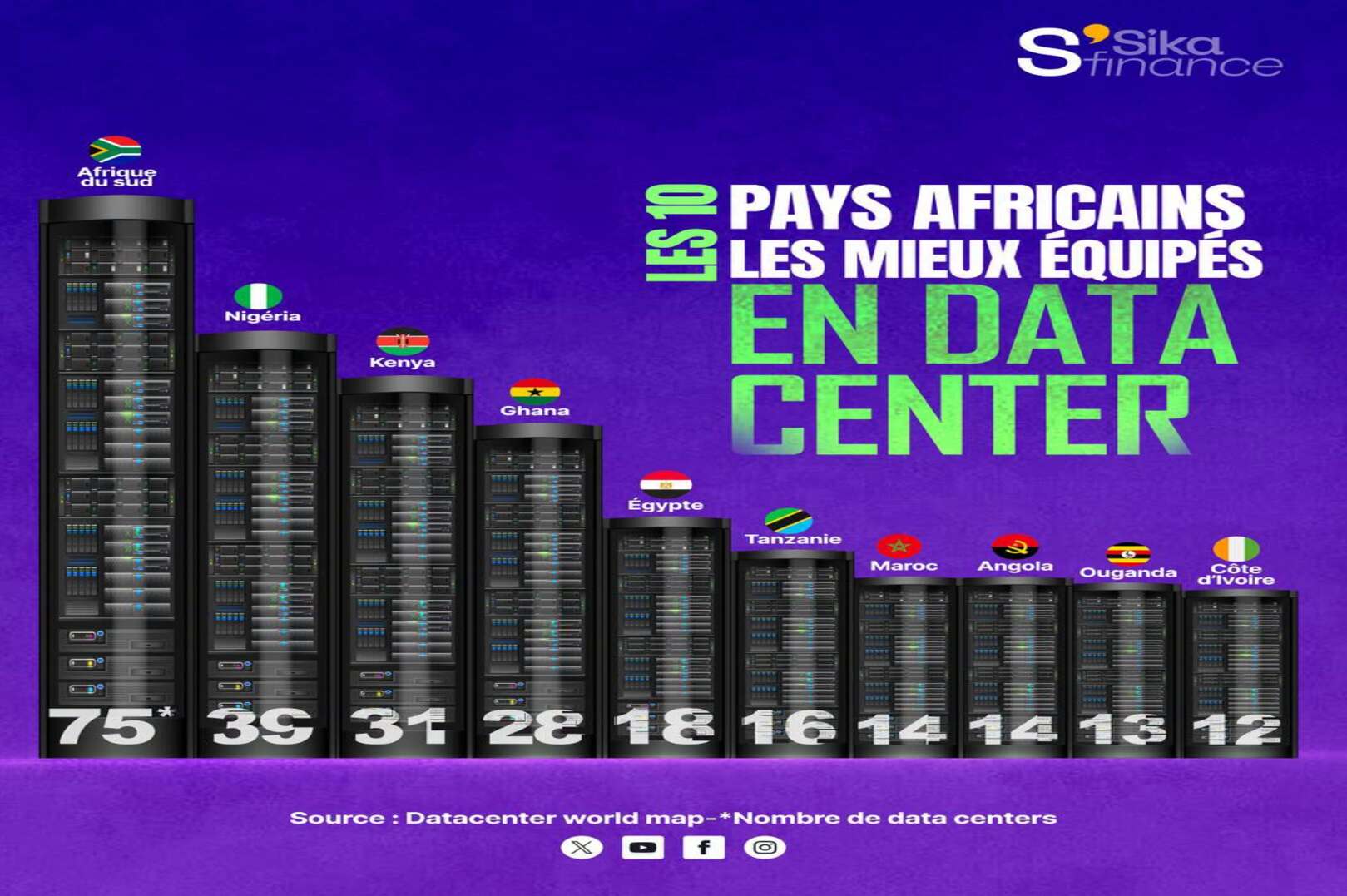
Africa's Top 10 Countries by Number of Data Centers
-
South Africa – 75
-
Nigeria – 39
-
Kenya – 31
-
Ghana – 28
-
Egypt – 18
-
Tanzania – 16
-
Morocco – 14
-
Angola – 14
-
Uganda – 13
-
Côte d'Ivoire – 12
While South Africa remains the continent's dominant data center market, West Africa is emerging as one of Africa's fastest-growing digital infrastructure regions. Nigeria, Ghana and Côte d'Ivoire are expected to play an increasingly important role as demand for cloud computing, AI services and secure data storage continues to rise.
With Africa's total installed data center capacity projected to reach 1,200 MW by 2030, the sector is poised to become a cornerstone of the continent's digital economy. However, sustaining this growth will depend on continued investment in reliable energy systems, resilient infrastructure and a skilled digital workforce capable of supporting the next generation of technological innovation.