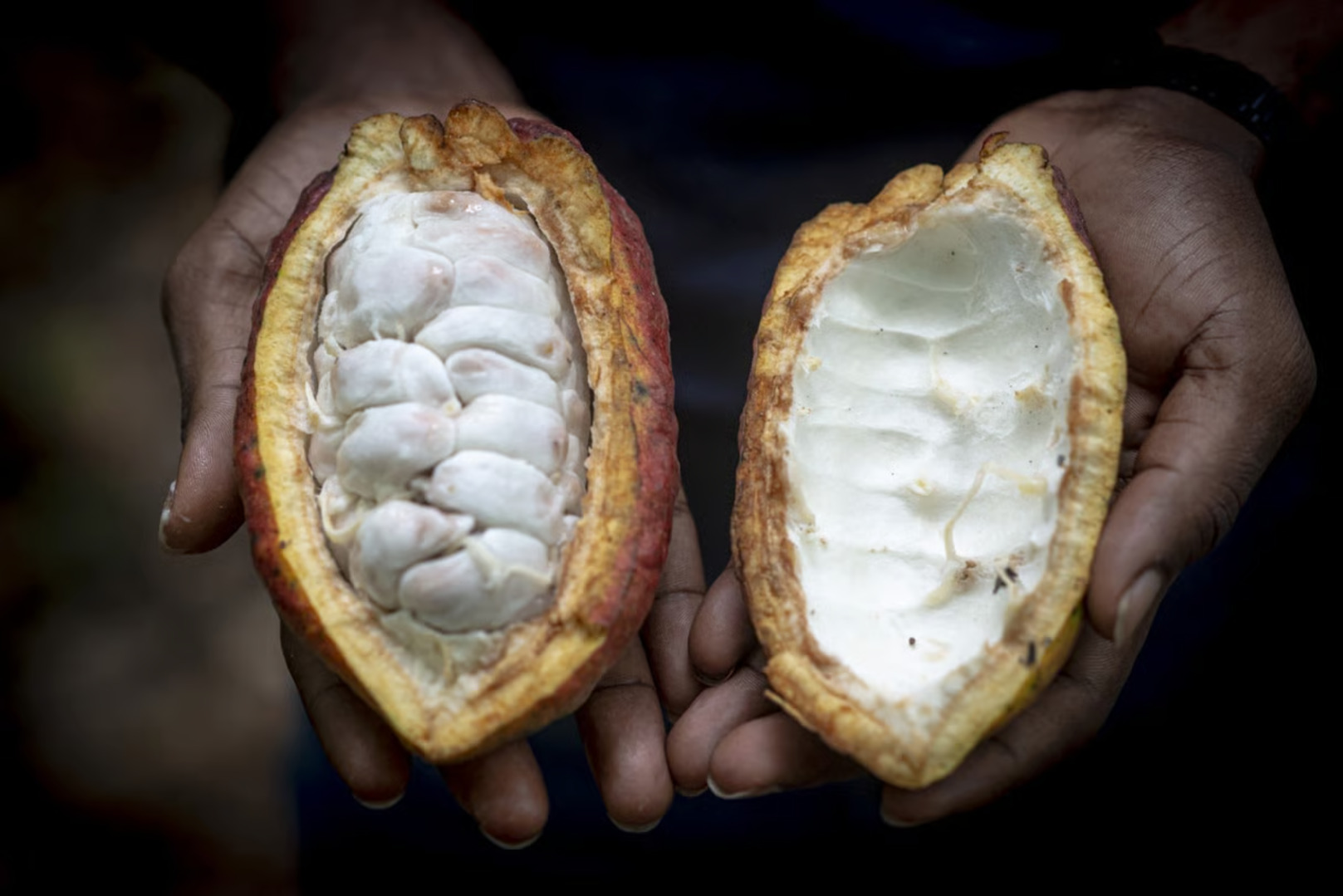
Cocoa: Facing Difficulties, Ghana Cuts Farm-Gate Price for Farmers
Falling global cocoa prices are putting Ghana and Côte d’Ivoire, the world’s two largest producers, under pressure. Accra has announced a series of emergency reforms to support its struggling cocoa sector.
The cocoa crisis continues in Ghana, the world’s second-largest cocoa producer behind Côte d’Ivoire. As declining global prices for the “brown gold” disrupt the sector with the regulator facing liquidity shortages, payment arrears to farmers, and large volumes of unsold beans the government announced emergency reforms on February 12. The main measure is a reduction in the farm-gate price paid to producers, presented as a necessary step to stabilize the crisis-hit industry.
The price paid to farmers now stands at just over 41,000 cedis (approximately $3,700) per ton, down from 58,000 cedis (nearly $5,270) set last October. “This measure has become necessary to reflect the reality of global cocoa prices and ensure an immediate injection of liquidity,” said Finance Minister Cassiel Ato Forson during a press conference in Accra.
International cocoa prices have fallen sharply, dropping from $12,500 per ton in December 2024 to $7,000 in October 2025. Currently, cocoa is trading at around $4,100 per ton, making Ghanaian cocoa “non-competitive,” according to the minister. The situation is also putting pressure on Côte d’Ivoire, where the government has purchased part of the harvest to relieve small producers and limit the broader impact of the crisis.
Immediate Repayment of Arrears
“It is therefore clear that the government must lower prices in order to reorganize and control supply on the global market, as prices are determined by supply and demand,” said Francis Teinor, president of the Cocoa Cooperative Farmers Association of Mankrong, a village in southern Ghana.
Heavily indebted, the sector regulator, the Ghana Cocoa Board (Cocobod), is running out of liquidity to purchase harvests. The situation worsened when production fell short of contracted sales volumes.
Authorities had projected 786,000 tons of cocoa for the 2023–2024 season, but only 432,000 tons were produced, resulting in what the finance minister described as an “unprecedented and unacceptable” shortfall and losses exceeding $1 billion.
The government has ordered the immediate repayment of arrears owed to farmers and plans to submit a bill to Parliament guaranteeing producers at least 70% of the gross export price.
50% Local Processing Target
Accra also intends to reform sector financing by issuing local bonds backed by cocoa revenues and to mandate, starting in the 2026–2027 season, that at least 50% of cocoa beans be processed locally to strengthen value addition and sustainably clean up the sector.
To restore Cocobod’s financial position, the government will seek parliamentary approval to convert approximately 5.8 billion cedis (about $527 million) in inherited debt owed to the Ministry of Finance and the central bank into longer-term bonds.
The cocoa sector, which supports around one million people, accounts for roughly 10% of Ghana’s GDP and relies heavily on smallholder farmers. Cocoa is the country’s third-largest source of export revenue after gold and oil.