UEMOA Credit Growth Moderates as Non-Performing Loans Rise
Lending activity in the West African Economic and Monetary Union showed mixed signals in January 2026, as annual credit growth remained positive but underlying indicators pointed to increasing strain in the banking sector.
Total credit to the economy rose to 40,031 billion CFA francs, marking a 4.7% increase compared to the same period a year earlier. However, on a monthly basis, lending recorded a slight decline, reflecting a slowdown linked to tighter credit conditions and heightened risk perception among financial institutions.
Banks across the West African Economic and Monetary Union have been adjusting their lending practices in response to rising uncertainties, leading to more selective credit allocation despite continued demand for financing.
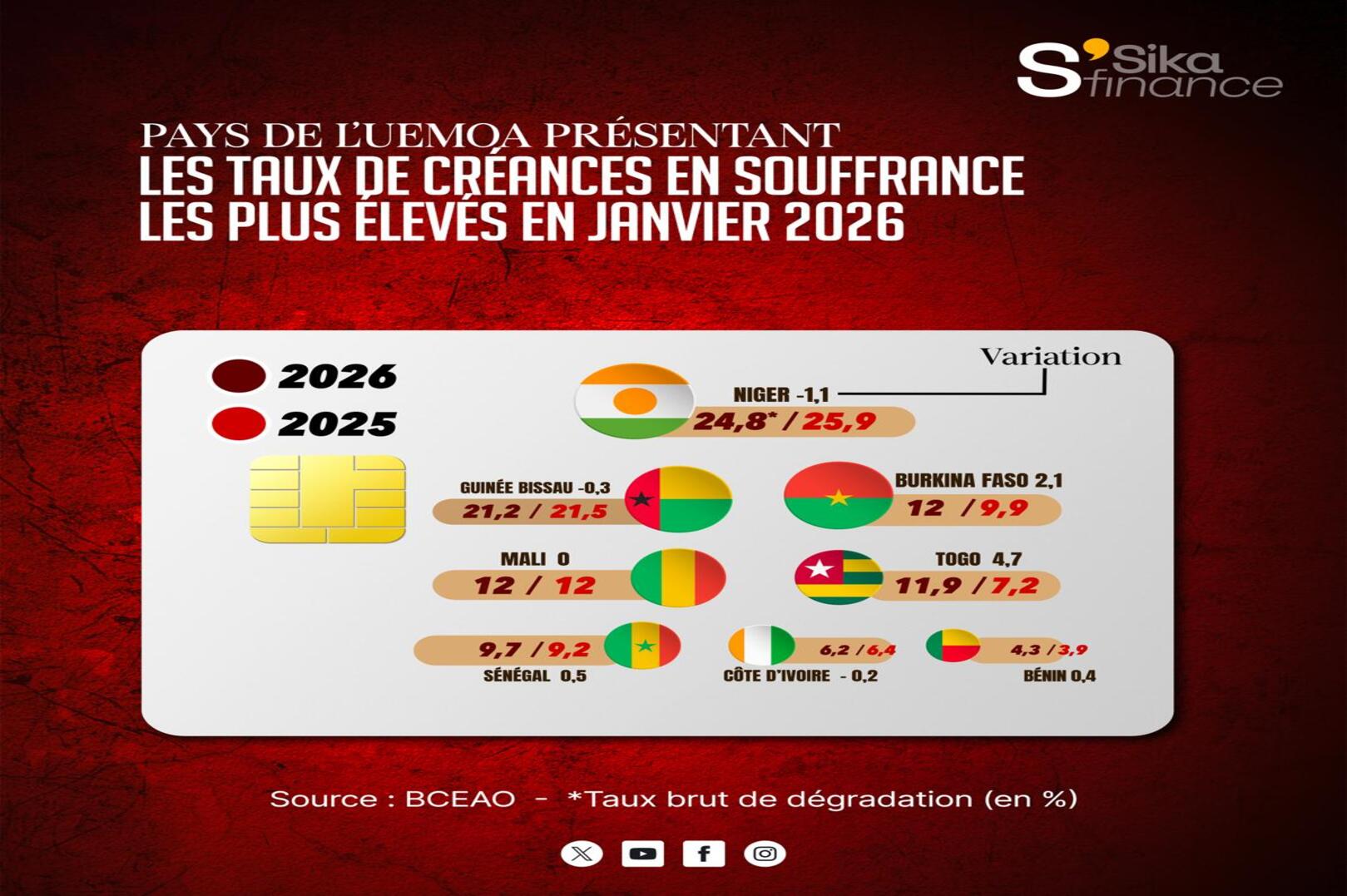
At the same time, asset quality indicators have weakened. Non-performing loans climbed to 3,631 billion CFA francs, with a gross ratio of 9.1% and a net ratio of 3.9%. The provisioning coverage ratio declined to 59%, signaling that the deterioration in loan quality is outpacing the accumulation of risk buffers within the banking system.
A regional divide is also becoming more pronounced. Coastal economies such as Côte d’Ivoire and Senegal continue to demonstrate relative resilience, supported by stronger economic diversification and investment flows. In contrast, Sahelian countries, including Niger and Guinea-Bissau, are experiencing higher levels of financial stress, reflected in elevated non-performing loan ratios.
The latest data underscore the challenge facing banks in the region: managing rising credit risk while maintaining sufficient lending to support economic growth.
The trajectory of credit conditions in the West African Economic and Monetary Union is expected to remain closely tied to both domestic economic stability and broader global financial developments.

