Côte d’Ivoire Calls for Stronger Global Traceability of Illegal Gold Trade
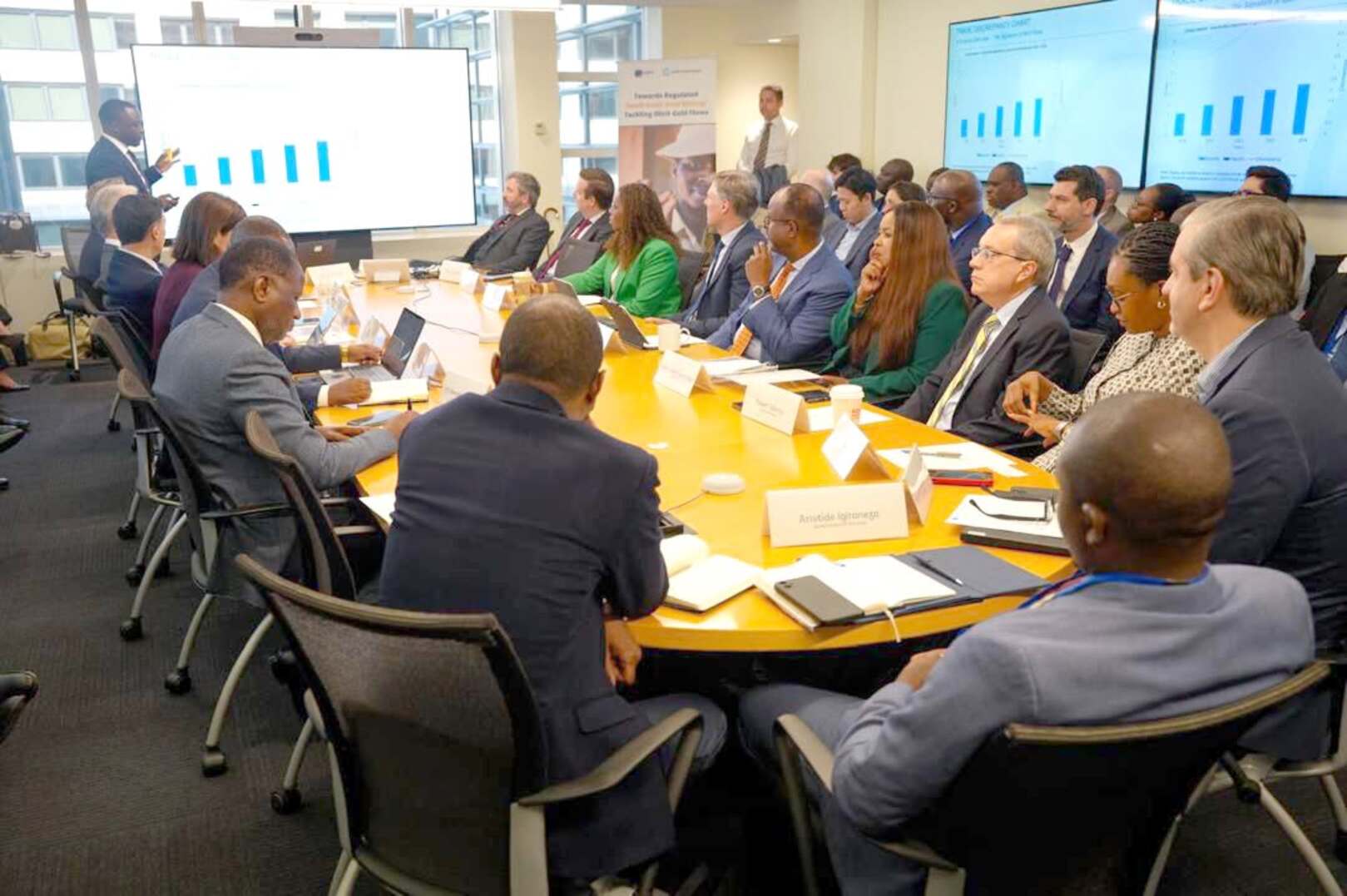
Mamadou Sangafowa-Coulibaly called on April 16, 2026, at the headquarters of the World Bank in Washington for stronger global traceability of gold production to prevent illegally sourced gold from entering formal supply chains.
Speaking during a meeting held on the sidelines of the Spring Meetings of the Bretton Woods institutions, he presented Côte d’Ivoire’s structured approach to tackling the rapid expansion of artisanal and small-scale mining.
The minister stressed that national and regional efforts alone would not be enough to contain illegal gold mining and called for stronger international coordination. He urged the global community to draw inspiration from the Kimberley Process Certification Scheme to create a global gold certification mechanism.
He also highlighted the need to transform artisanal mining into a structured sector capable of generating jobs and economic value.
In addition, he called for stricter global regulation of critical substances such as mercury and cyanide, which continue to circulate through illegal networks despite being banned in many countries. According to him, these chemicals cause irreversible damage to soil, water resources, and public health.
The minister proposed the establishment of an international framework bringing together governments, financial institutions, and private sector actors, with support from the World Bank. He also emphasized the importance of stronger regional coordination through ECOWAS and WAEMU to address cross-border gold flows and harmonize mining policies.
He noted that nearly 435 tonnes of gold escape formal channels every year in Africa, fueling illicit financial flows and weakening public revenues. In Côte d’Ivoire alone, 142 tonnes of gold reportedly leave official circuits, representing an estimated loss of 4.6 trillion CFA francs.
However, he pointed out that the government has already taken major steps, including dismantling more than 7,000 illegal mining sites, implementing the Mining Code, and launching the National Program for the Rationalization of Gold Mining.