Transformation of Agri-Food Systems: Bruno Nabagné Koné Outlines Five Priorities of the Ivorian Government in Nouakchott
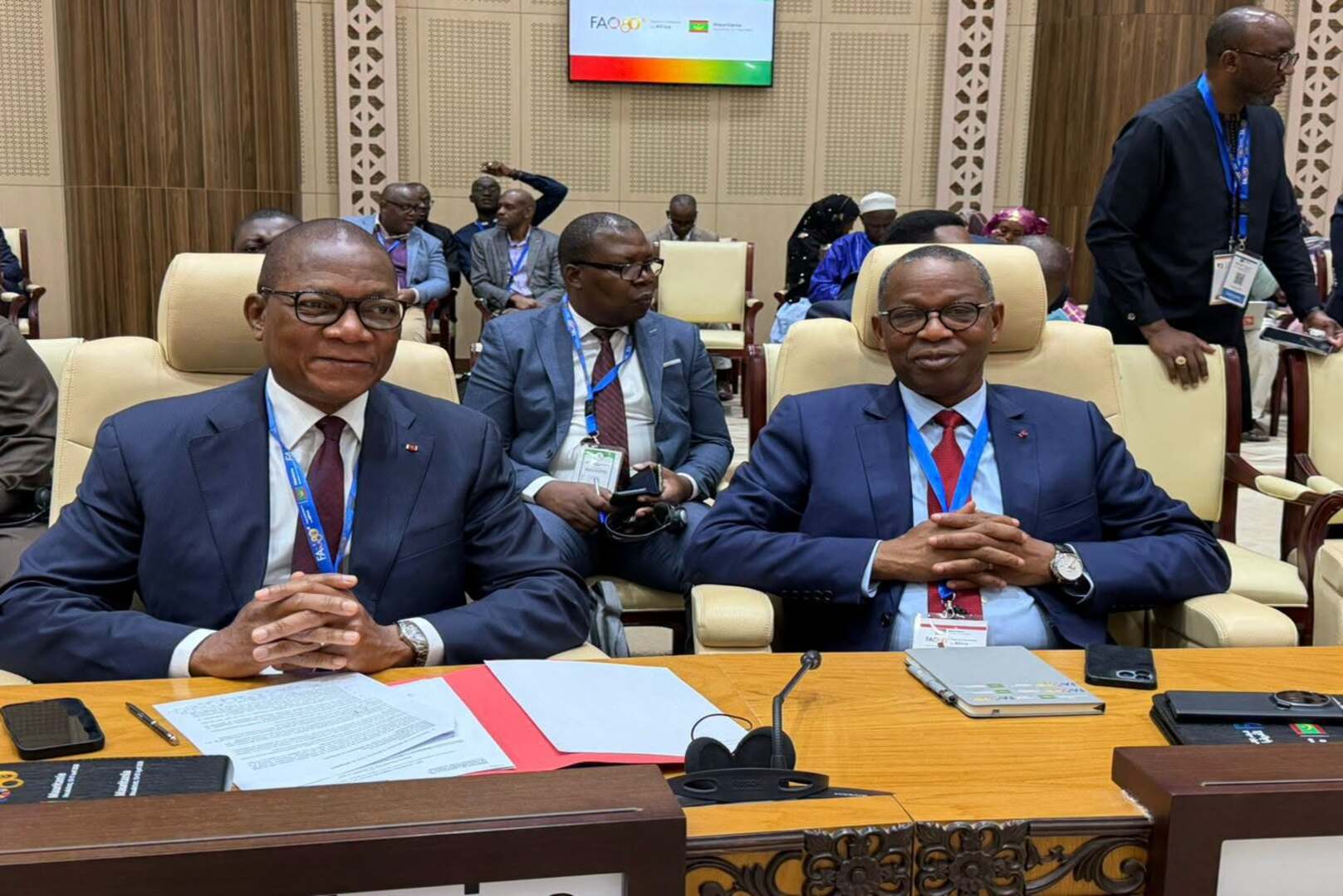
Bruno Nabagné Koné, Côte d’Ivoire’s Minister of Agriculture, Rural Development and Food Crops, shared the country’s experience in transforming agri-food systems before outlining five key government priorities in the sector. He spoke during the first ministerial meeting of the 34th Regional Conference of the FAO for Africa, held on Thursday, April 16, 2026, at the International Conference Center Al Mourabitoun in Nouakchott.
In a spirit of government solidarity, the Minister of Agriculture was accompanied by his counterpart in charge of Employment, Social Protection and Vocational Training, Adama Kamara.
This high-level regional meeting provided an opportunity to conduct a forward-looking analysis of the drivers and levers for transforming agricultural systems across Africa.
“Côte d’Ivoire fully subscribes to these orientations, which are already integrated into the preparation of its third National Agricultural Investment Program (PNIA 3), currently under formulation,” stated Bruno Nabagné Koné, before adding: “Africa stands at a decisive turning point in its agri-food development.”
To achieve these objectives, the Ivorian government has identified five key priorities:
· Accelerating the structural transformation of agri-food systems through competitive and industrialized value chains;
· Strengthening resilience to climate change, particularly through the promotion of sustainable agroforestry models;
· Deepening regional integration to build more resilient and complementary agricultural markets;
· Leveraging digital tools to boost productivity and improve smallholder farmers’ access to innovation;
· Enhancing social protection for farmers, coupled with the promotion of the blue economy to better harness fisheries resources.
Under the leadership of President Alassane Ouattara, Côte d’Ivoire aims to strengthen its position as a leading agricultural power, both in Africa and globally. This ambition is supported by the country’s status as the world’s leading producer of key strategic commodities such as cocoa and cashew nuts, as well as a major player in food crop production.